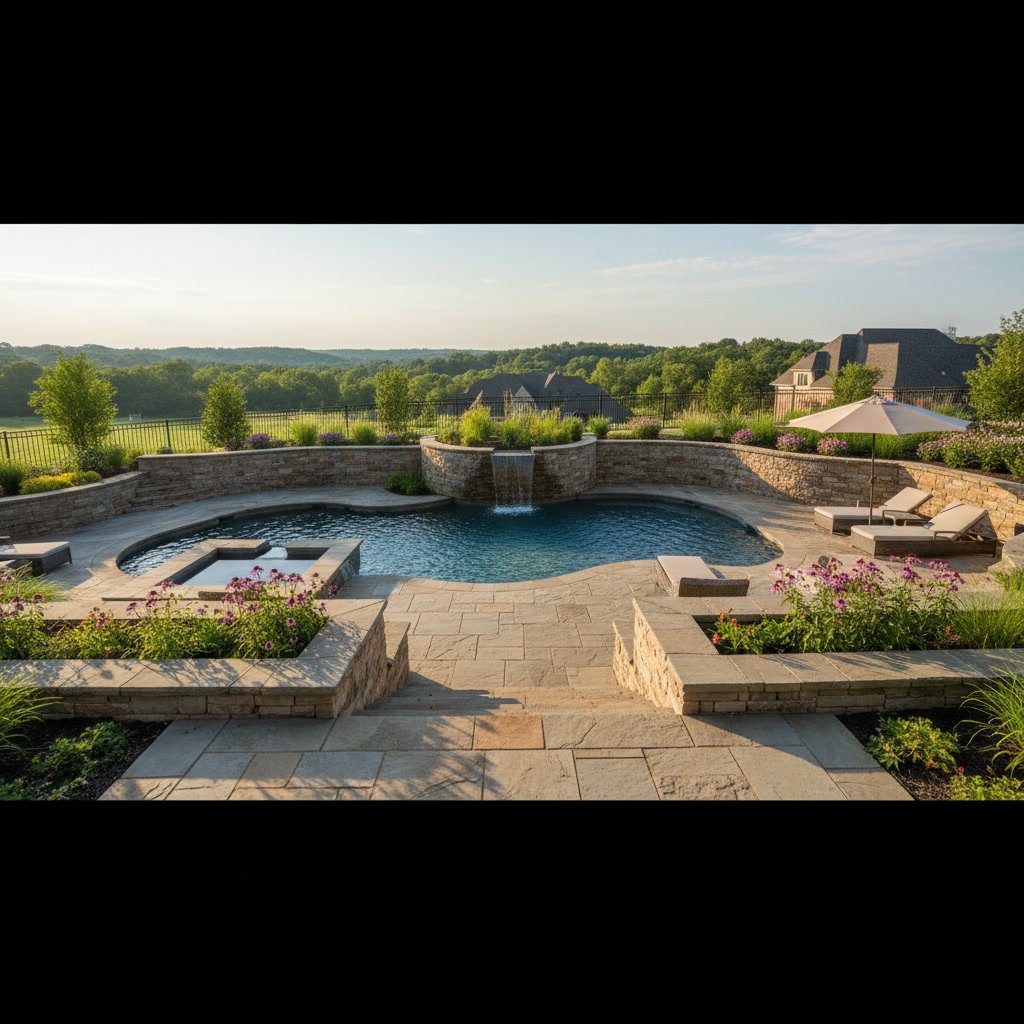
You’ve planned the pool, chosen the finish, and imagined countless summer afternoons by the water. But without the right foundation and surrounding structures, that vision falls short. The difference between a basic backyard pool and a true outdoor retreat comes down to hardscaping.
If you’re asking what are hardscapes, you’re not alone. The term refers to the solid, non-living elements of landscape design: stone patios, concrete decking, retaining walls, walkways, outdoor kitchens, and any other permanent structure built from durable materials. While your pool is the centerpiece, hardscapes frame it, define how you use the space, and determine whether your investment holds up to Nashville’s weather extremes.
This guide explains what hardscapes are, which materials perform best in Middle Tennessee, and how proper hardscape planning turns a simple pool into a cohesive backyard resort.
Understanding Hardscapes in Pool Design
Hardscapes are the structural backbone of outdoor living spaces. They include any built feature made from rock, stone, concrete, brick, or masonry. In pool projects, hardscaping typically encompasses the pool deck, surrounding patios, walkways connecting different areas, retaining walls that manage grade changes, and permanent fixtures like fire pits or seating walls.
The term contrasts with softscaping, which covers plants, mulch, grass, and other living landscape elements. Both are necessary for a complete outdoor design, but hardscapes form the permanent infrastructure. They define circulation patterns, create usable flat areas, manage water drainage, and provide surfaces that withstand heavy foot traffic and pool chemicals.
For homeowners in Greater Nashville, hardscaping is especially important. The region experiences freeze-thaw cycles, heavy spring rains, summer heat that can reach the mid-90s, and occasional ice. Materials and installation methods must account for these extremes or face cracking, shifting, and premature failure.
Why Hardscapes Are Essential for Nashville Pools
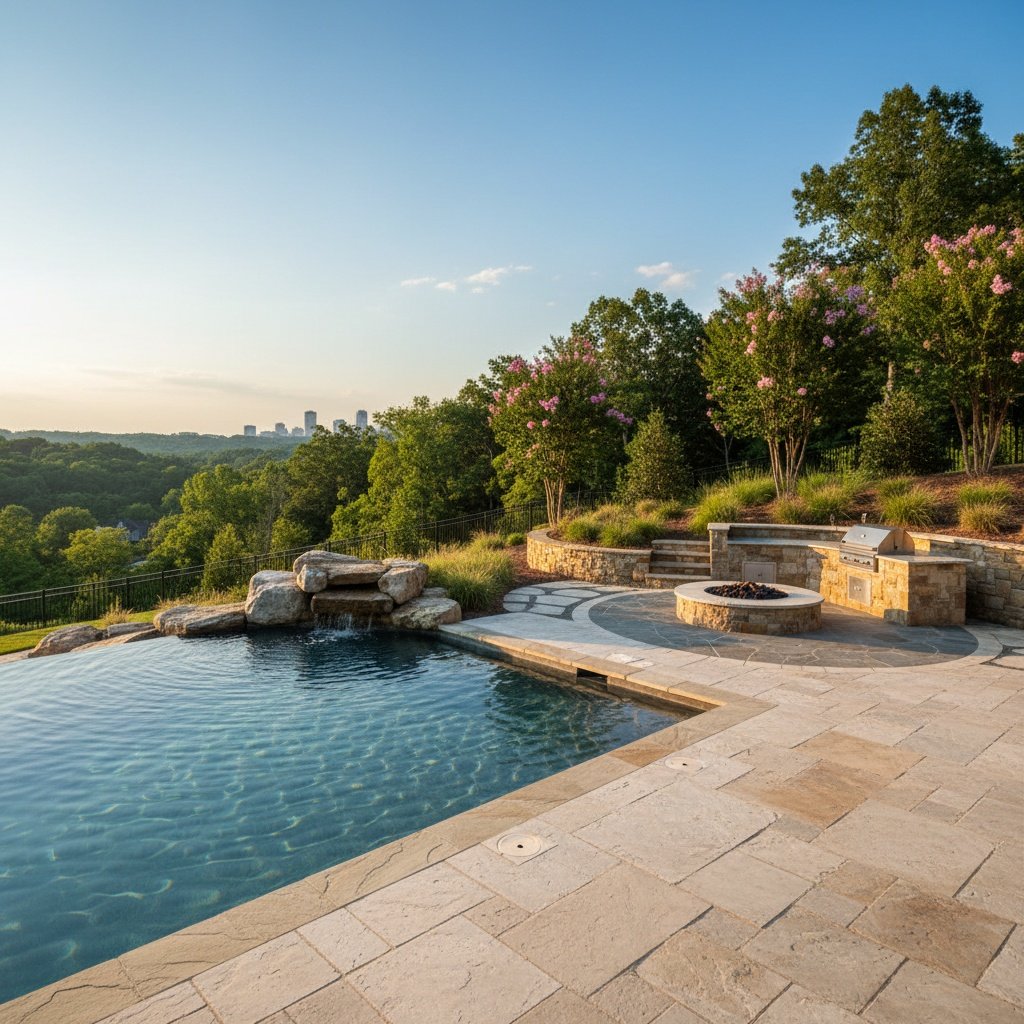
A pool without proper hardscaping is incomplete. The area around your pool takes constant abuse from bare feet, wet surfaces, UV exposure, and chemical splashes. Grass won’t survive the traffic. Dirt turns to mud. Temporary solutions fail quickly.
Hardscapes solve these problems by creating durable, functional surfaces that define your outdoor space. They prevent erosion, reduce maintenance, and establish clear zones for lounging, dining, cooking, and circulation. A well-designed hardscape also increases property value and extends the usable season of your backyard.
In neighborhoods from Franklin to Hendersonville, homeowners expect outdoor spaces that look finished and feel permanent. Hardscaping delivers that polish while addressing practical concerns like drainage, slope management, and accessibility.
Durability and Longevity
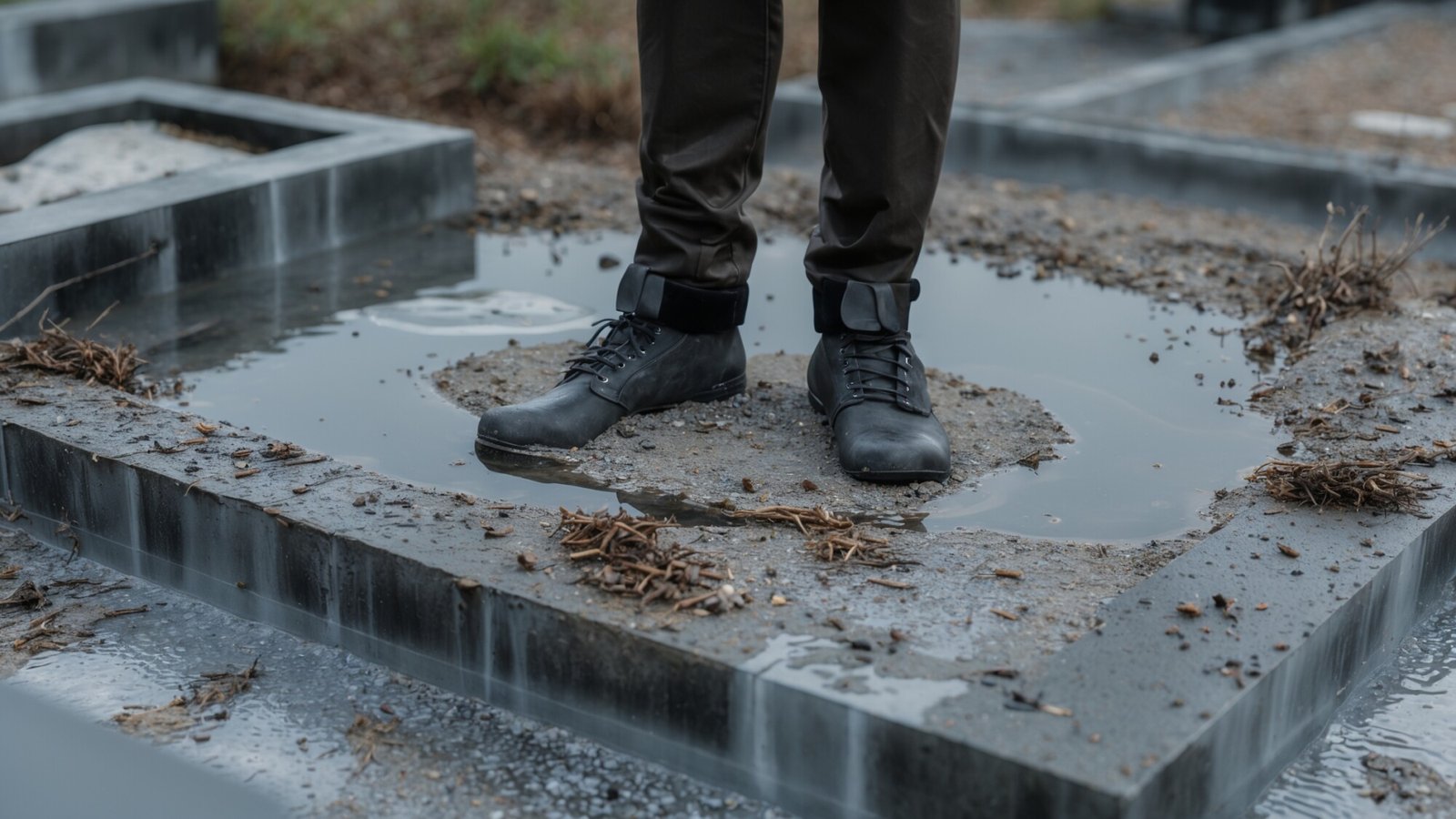
Nashville’s climate is hard on outdoor surfaces. Winter freeze-thaw cycles cause concrete to crack and pavers to heave if not installed correctly. Spring storms dump several inches of rain in a matter of hours, testing drainage systems. Summer heat bakes surfaces to 130 degrees or higher, making some materials too hot to walk on.
Quality hardscaping materials, properly installed with correct base preparation and drainage, withstand these conditions for decades. Natural stone, poured concrete with control joints, and permeable pavers all perform well when matched to the site and installed by experienced builders.
Safety and Functionality
Pool decks must be slip-resistant when wet, stable underfoot, and free of sharp edges. Hardscaping materials like textured concrete, tumbled pavers, and natural stone provide traction that grass and gravel cannot. They also stay cooler than smooth concrete or dark pavers, making barefoot walking more comfortable.
Proper hardscape design includes gentle slopes for drainage, wide walkways for safe movement, and level areas for furniture. These details prevent water pooling, reduce slip hazards, and make the space more enjoyable for all ages.
Pro Tip: When planning your pool deck, allow at least five feet of hardscape around all sides of the pool. This provides enough space for lounge chairs, keeps grass and dirt out of the water, and creates a clean visual border.
Common Hardscape Materials for Pool Areas
Material choice impacts cost, maintenance, appearance, and longevity. The best hardscape materials for Nashville pools balance aesthetics with performance in local conditions. Each option has strengths and trade-offs.
Poured Concrete
Concrete remains the most common pool deck material due to its affordability, durability, and versatility. When finished with a broom texture, stamped pattern, or color stain, concrete can mimic natural stone or tile at a fraction of the cost. Poured concrete creates seamless surfaces without joints where weeds can grow.
However, concrete requires proper curing, control joints to manage cracking, and periodic sealing to resist stains and weather damage. In Nashville’s freeze-thaw climate, any standing water that seeps into cracks can cause spalling and surface failure. Professional installation with adequate base preparation is essential.
Natural Stone
Flagstone, bluestone, and Tennessee fieldstone offer timeless beauty and superior heat resistance. Natural stone stays cooler underfoot than concrete, even in direct sun. The irregular shapes and earth tones blend with surrounding landscapes and complement both traditional and modern pool designs.
Stone costs more than concrete and requires skilled masons to install correctly. Joints must be mortared or filled with polymeric sand to prevent weed growth and shifting. Properly installed stone patios and pool decks last 30 years or more with minimal maintenance.
Pavers
Concrete and clay pavers combine the durability of concrete with the look of brick or stone. Pavers install over a compacted gravel base and can be removed and reset if settling occurs. They handle freeze-thaw cycles better than poured concrete because individual units move independently rather than cracking as a monolithic slab.
Paver joints require periodic re-sanding to prevent weeds and maintain stability. Color options are vast, and patterns range from simple running bond to intricate herringbone layouts. When choosing pavers for pool decks, select tumbled or textured surfaces for better traction when wet.
Integrating Retaining Walls and Elevation Changes
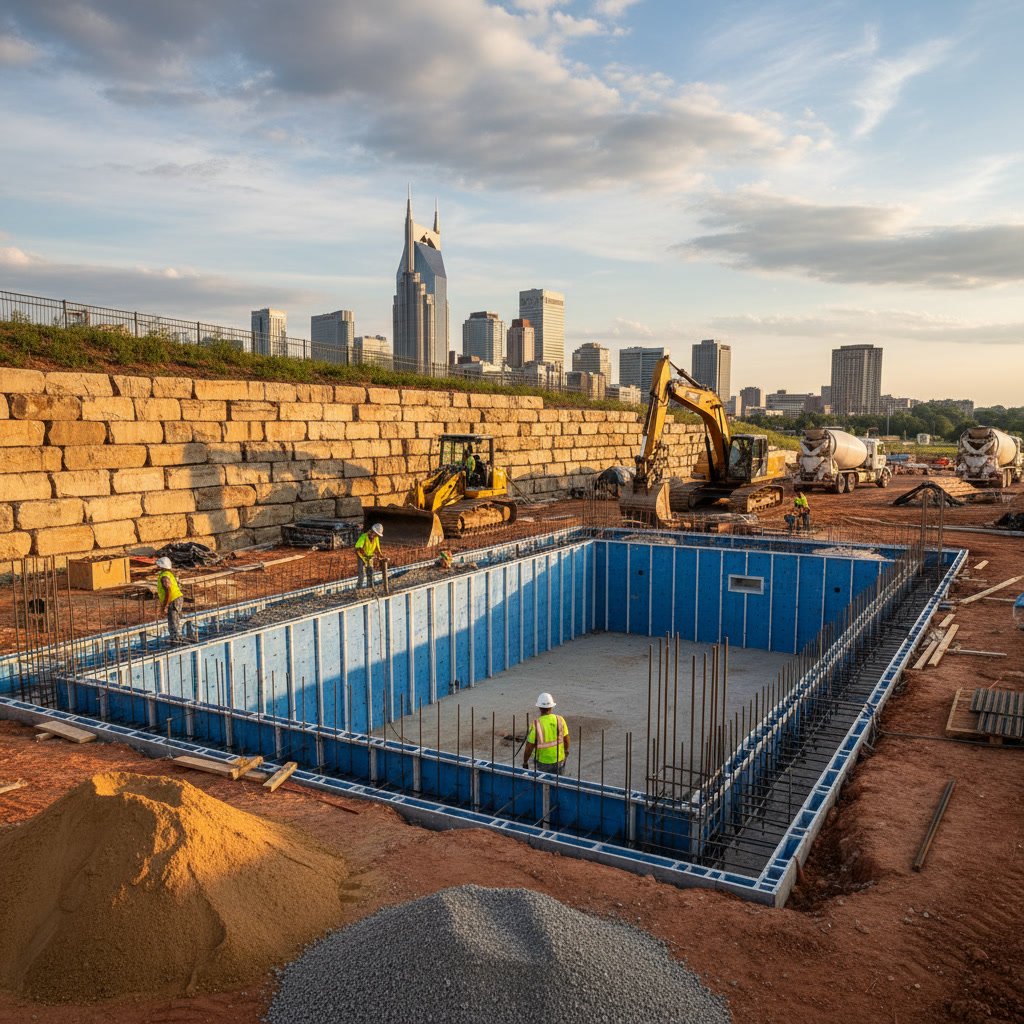
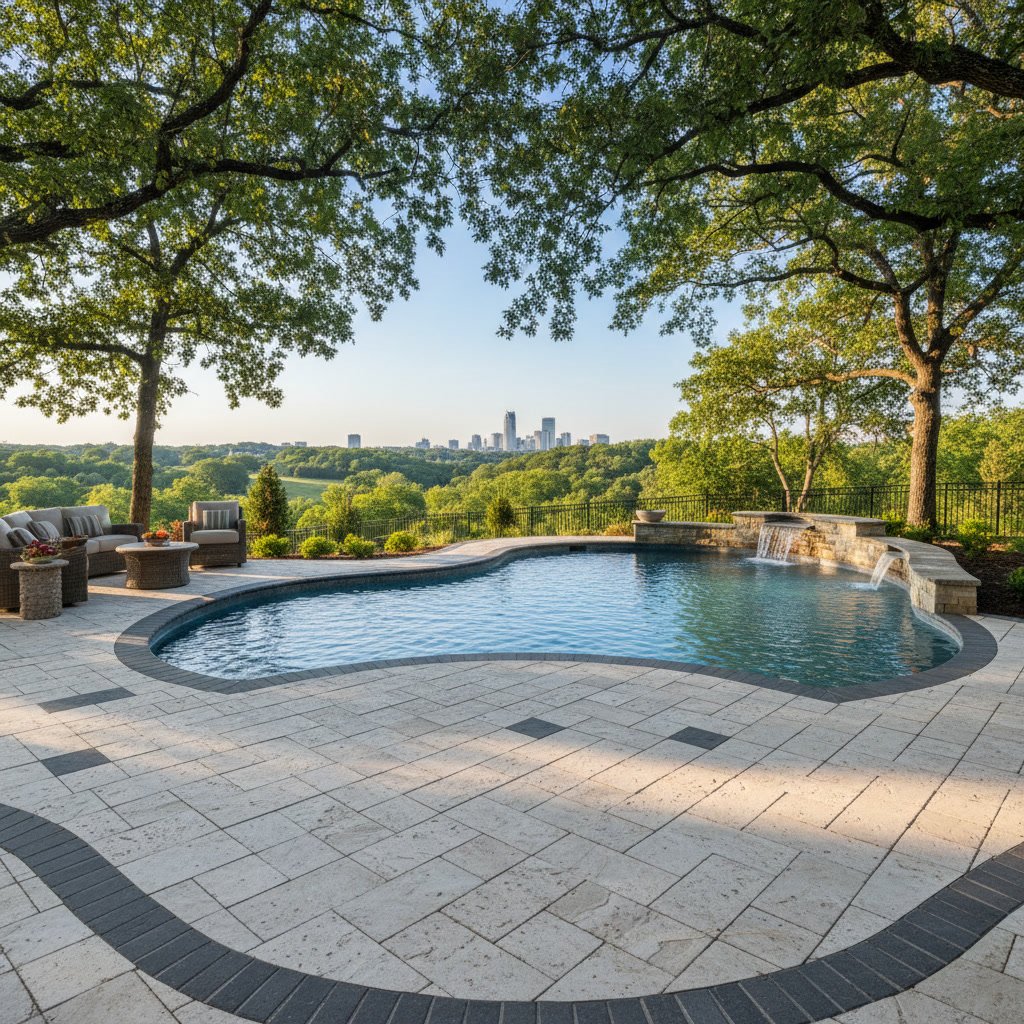
Many Nashville properties feature sloped lots that require grade management. Retaining walls are a critical hardscape element that makes pool installation possible on uneven terrain. They create level platforms for the pool and surrounding deck, prevent soil erosion, and add visual interest through tiered landscaping.
Retaining walls can be built from poured concrete, concrete block, natural stone, or modular wall systems. The choice depends on wall height, soil conditions, aesthetic preference, and budget. Walls taller than four feet typically require engineering and drainage systems to manage hydrostatic pressure.
In areas like Spring Hill and Brentwood, where rolling hills are common, retaining walls often define multiple outdoor living zones. A lower tier might house the pool, while an upper level features a patio and outdoor kitchen connected by stone steps. This layered approach maximizes usable space and creates dramatic sightlines. Our article on the best retaining wall materials for sloped Nashville yards offers more detail on material selection and installation considerations.
Drainage Considerations
Every retaining wall and hardscape surface needs proper drainage. Nashville receives about 50 inches of rain annually, often in heavy bursts. Without adequate gravel bases, weep holes, and surface slopes, water pools behind walls, under pavers, and on pool decks.
Professional hardscape installation includes subsurface drainage systems that direct water away from structures and prevent hydrostatic pressure buildup. Surface grades should slope at least one-quarter inch per foot away from the pool to prevent runoff from entering the water.
Expanding Your Outdoor Living Space
Hardscapes extend far beyond the pool deck. The most successful backyard resort designs integrate multiple hardscape elements to create outdoor rooms with specific functions.
Outdoor Kitchens
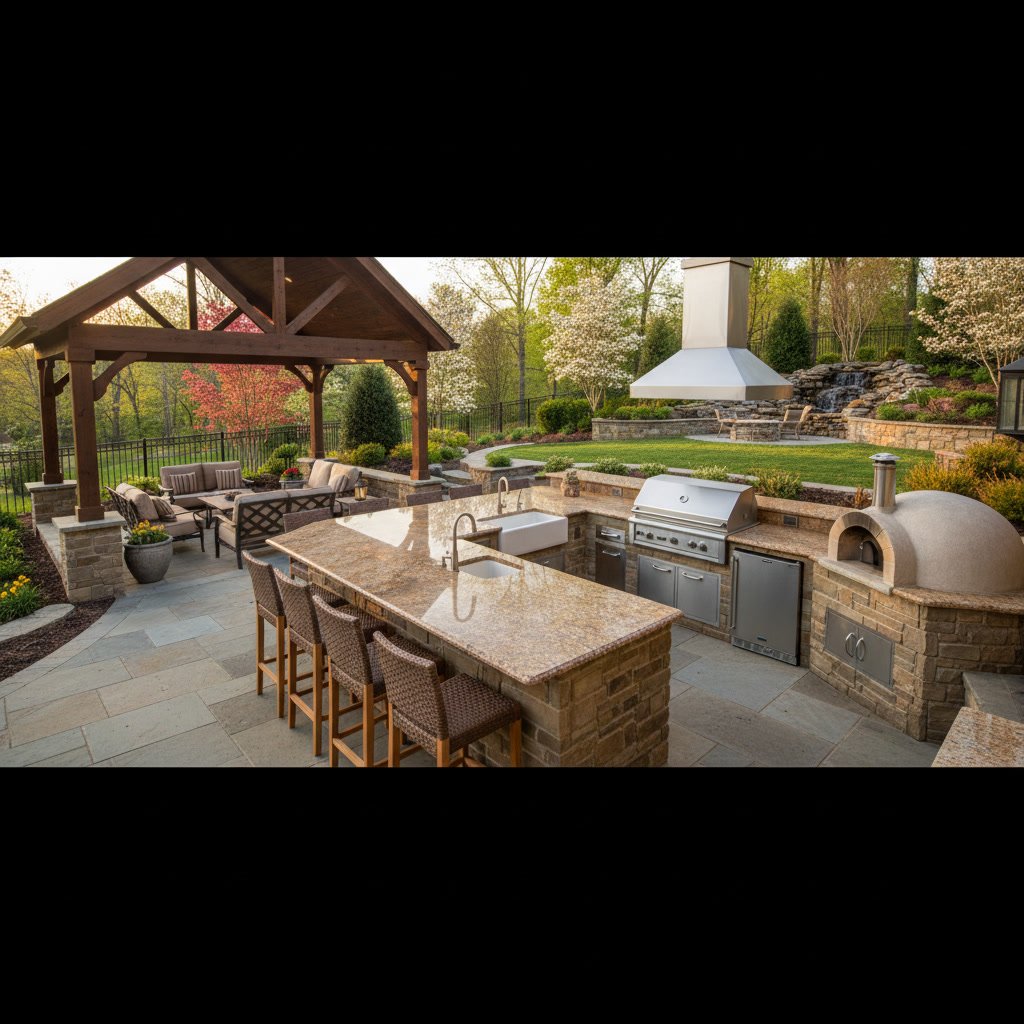
An outdoor kitchen transforms your pool area into a true entertaining hub. Built-in grills, refrigerators, sinks, and countertops allow you to prepare meals without leaving the party. Outdoor kitchens require hardscape foundations, often a combination of concrete pads, masonry islands, and stone or tile counters.
Proper planning ensures adequate utility connections, weather protection, and clearance from combustible materials. Most outdoor kitchens sit on or near the main pool deck for easy access, though some designs place them on an adjacent patio to separate cooking zones from swimming areas.
Fire Features and Seating Walls
Fire pits and fireplaces add warmth and ambiance, extending the pool season into cooler months. Built from brick, stone, or concrete, these features become natural gathering spots. Seating walls around fire pits provide permanent seating without the need for furniture.
Fire features require non-combustible hardscape surrounds and safe clearances from structures, plants, and pool equipment. Gas lines or wood storage also factor into design and placement decisions.
Water Features
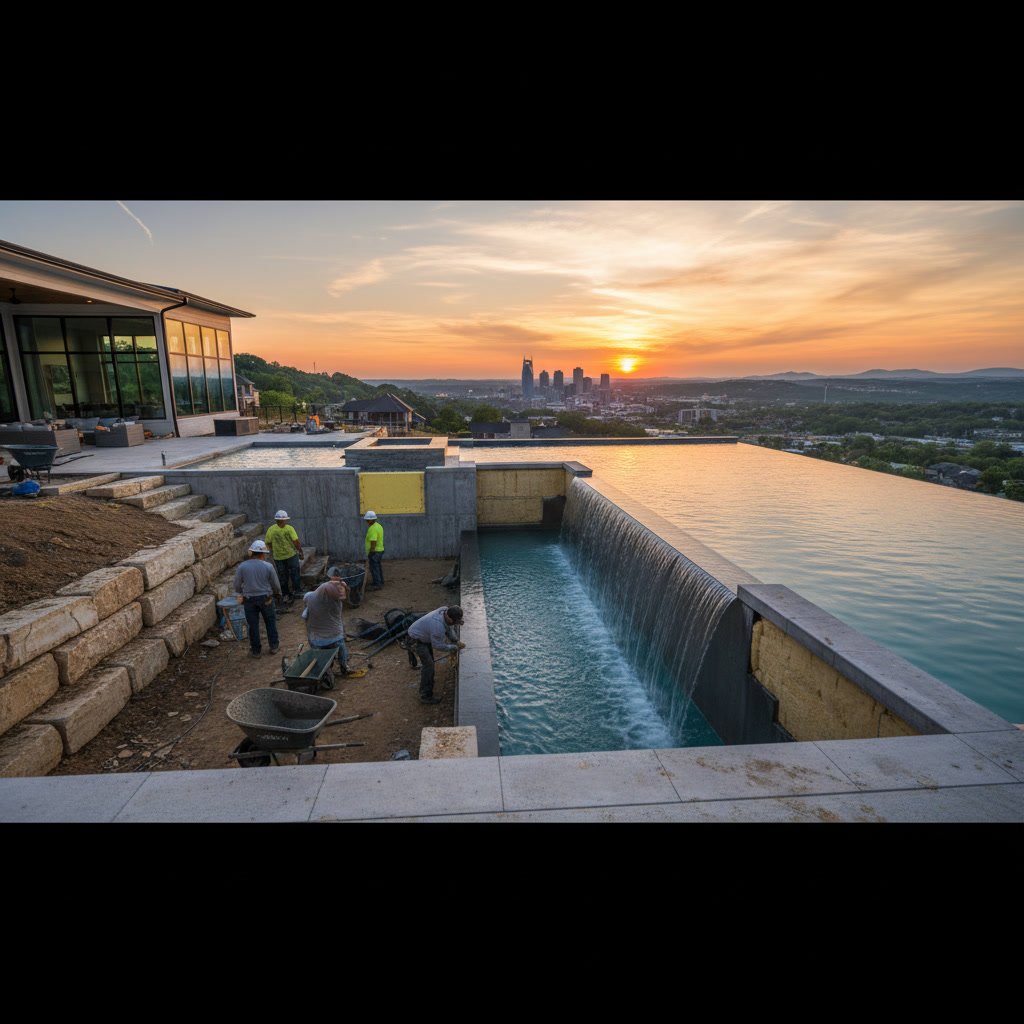
Waterfalls, fountains, and spillways are hybrid elements that combine plumbing with hardscape construction. Stone waterfalls built into retaining walls or pool edges add sound, motion, and visual interest. These water features require careful integration with pool circulation systems and structural support for heavy stonework.
Key Takeaway: Hardscaping and pool construction should happen in tandem. Planning all elements together ensures cohesive design, proper utility placement, and efficient construction scheduling.
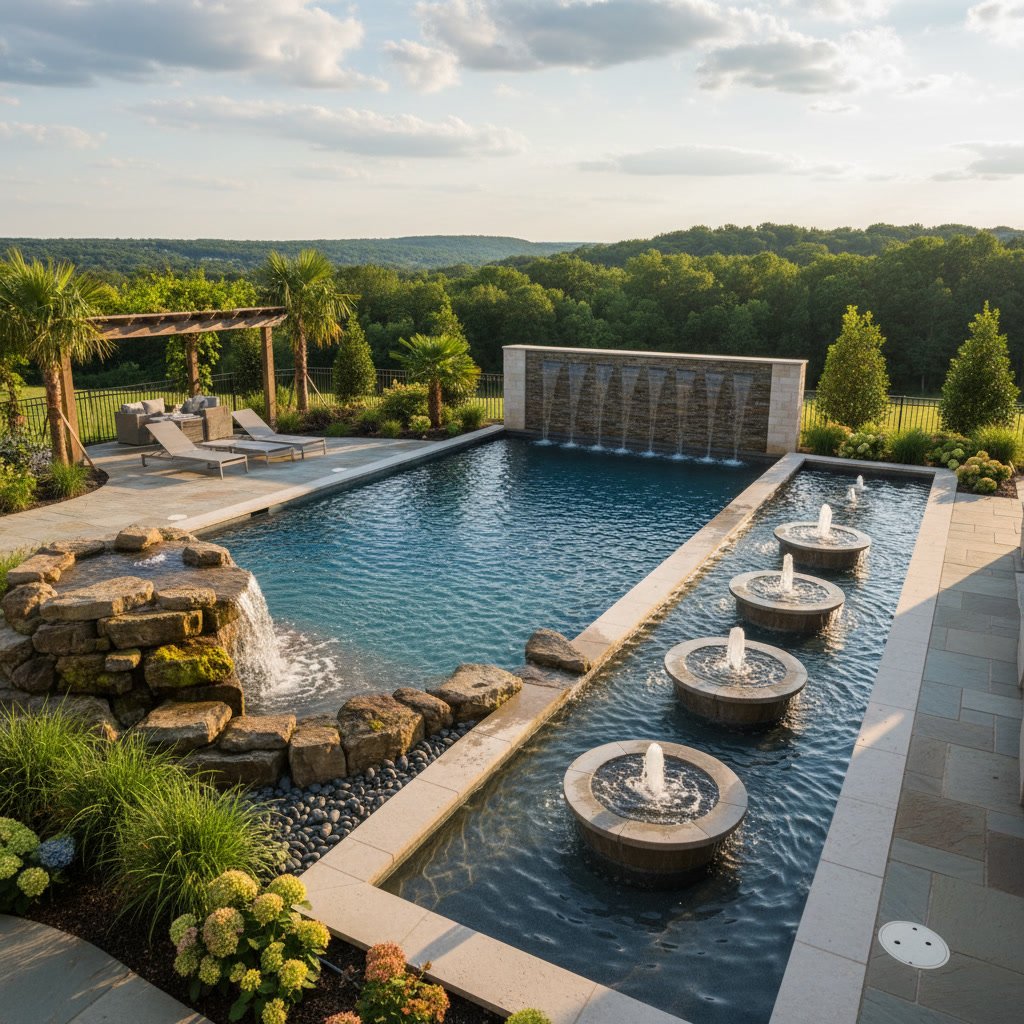
Choosing the Right Hardscape Design for Your Property
Effective hardscape design balances aesthetics, function, budget, and site conditions. The best approach considers how you’ll actually use the space, what maintenance you’re willing to perform, and how different materials age in Nashville’s climate.
Start by mapping existing grade, drainage patterns, sun exposure, and utility locations. Identify where you need level surfaces, where retaining walls might be necessary, and how foot traffic will flow between the house, pool, and other outdoor areas.
Material selection should match your home’s architecture and your lifestyle. Formal homes pair well with geometric pavers and clean lines. Rustic properties suit natural stone and irregular shapes. Families with young children might prioritize slip-resistant surfaces and rounded edges, while entertainers focus on ample patio space and outdoor kitchen access.
Working with Experienced Builders
Hardscaping is labor-intensive and detail-dependent. Poor base preparation, inadequate drainage, or improper material selection leads to failure within a few seasons. Experienced pool and hardscape builders understand local soil conditions, weather patterns, and building codes.
Backyard Resort Pools INC has overseen custom pool and hardscape projects across Greater Nashville for over 50 years. Owner Ernie Nagy personally manages each project, ensuring that hardscape installation meets the same exacting standards as pool construction. This hands-on approach eliminates the miscommunication and quality issues common with large-volume builders.
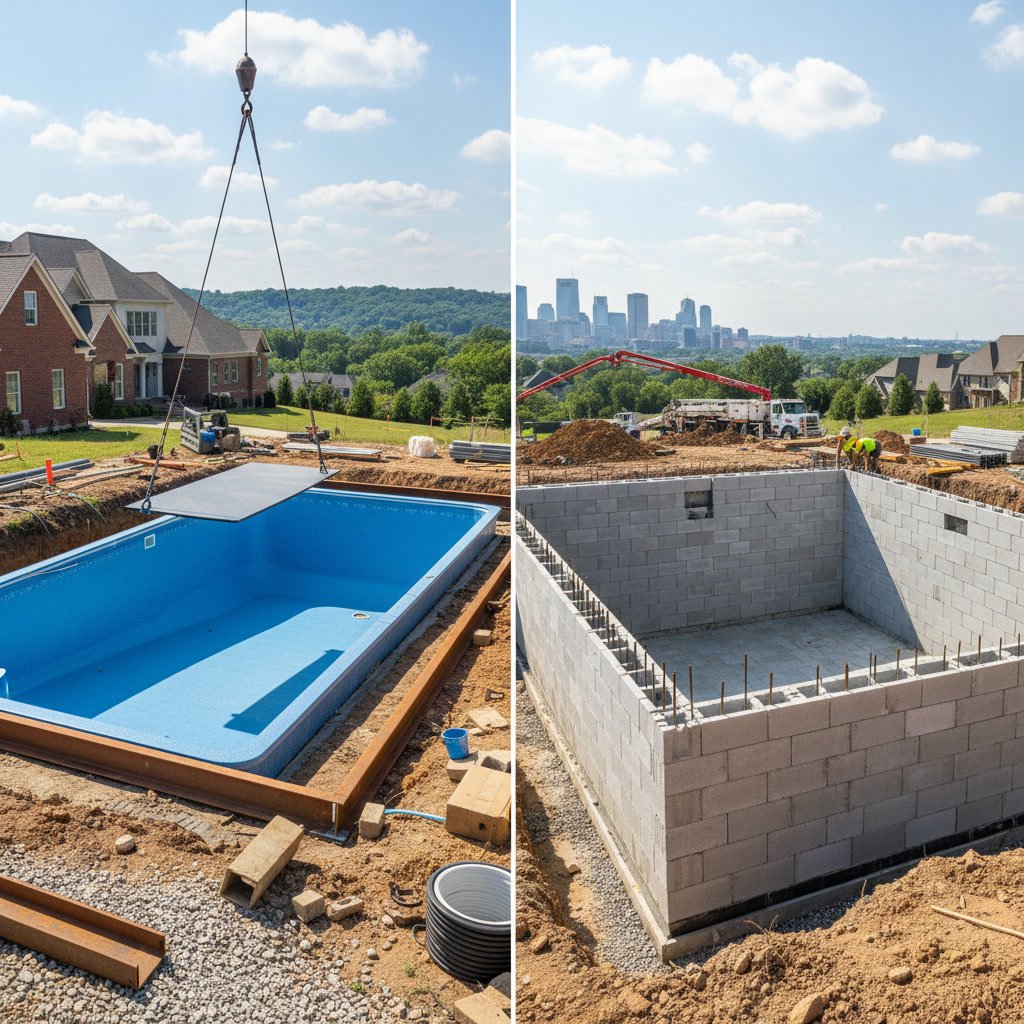
Whether you’re building a fiberglass pool in Gallatin, a concrete pool in Murfreesboro, or an ICF pool in Brentwood, the surrounding hardscapes determine how the finished project looks and functions. Coordinating both elements under one experienced contractor streamlines the process and delivers better results.
Maintenance and Long-Term Care
Quality hardscapes require minimal maintenance but are not maintenance-free. Annual or biannual care keeps surfaces looking good and performing well.
Concrete decks benefit from pressure washing and resealing every two to three years. Sealers protect against stains, moisture penetration, and surface wear. Natural stone may need repointing if mortar joints deteriorate, and paver surfaces require joint sand replacement as it washes or blows away.
Retaining walls should be inspected for cracks, tilting, or drainage issues. Small problems caught early prevent expensive repairs. Proper drainage systems installed during construction reduce the likelihood of major failures.
Winter preparation includes clearing debris from drainage channels, trimming overhanging branches, and checking for standing water that could freeze and cause damage. Nashville winters are generally mild, but occasional hard freezes can damage compromised surfaces.
Frequently Asked Questions
What is the most cost-effective hardscape material for a pool deck
Poured concrete with a broom or light texture finish is the most affordable option, typically ranging from six to 12 dollars per square foot installed. While it lacks the visual interest of stone or pavers, concrete is durable, slip-resistant, and easy to maintain. Stamped or stained concrete adds character at a moderate cost increase.
How long does it take to install hardscaping around a pool
Timeline depends on project size and complexity. A basic concrete pool deck for an average-sized pool takes three to five days, including base prep, pouring, and curing. Projects with retaining walls, extensive patios, outdoor kitchens, or natural stone can take several weeks. Weather delays are common during Nashville’s rainy spring season.
Can I add hardscaping to an existing pool
Yes, hardscaping can be added or expanded around existing pools. Many homeowners start with a basic deck and later add patios, fire pits, or outdoor kitchens as budgets allow. The key is ensuring new hardscape ties into existing drainage and matches the elevation and style of current surfaces. Experienced contractors can integrate additions seamlessly.
Do hardscapes increase home value
Quality hardscaping significantly boosts property appeal and resale value. Buyers view complete outdoor living spaces as premium features. Well-designed patios, retaining walls, and pool decks can return 60 to 80 percent of their cost at resale, with even higher returns in competitive markets like Franklin and Brentwood where outdoor amenities are expected.
What is the difference between hardscapes and landscaping
Hardscapes refer to permanent, non-living structures made from stone, concrete, brick, or masonry. Landscaping is a broader term that includes both hardscapes and softscapes, which are the living elements like plants, trees, grass, and mulch. Both work together to create functional and beautiful outdoor spaces.
Building Your Complete Backyard Retreat
What are hardscapes? They’re the foundation that transforms a simple pool into a complete outdoor living environment. From the deck you walk on to the retaining walls that shape your yard, every hardscape element plays a role in how your space looks, functions, and lasts.
Successful pool projects integrate hardscaping from the start, selecting materials that suit Nashville’s climate and designing layouts that match how you live. Whether you need extensive grading and retaining walls or a straightforward patio and pool deck, experienced builders ensure the work holds up to decades of use.
Backyard Resort Pools INC specializes in custom pool and hardscape projects throughout Greater Nashville. With over 50 years of hands-on experience, owner Ernie Nagy personally oversees every detail to ensure quality, transparency, and results that exceed expectations. If you’re ready to discuss your backyard vision, call +16159441612 to schedule a consultation.