Spring Hill homeowners often face a common challenge when planning their dream backyard pool: dealing with sloped terrain. The rolling hills that make this area so picturesque can complicate pool construction, but they also create opportunities for truly spectacular designs. If you’re wondering which pool type works best for a pool sloped yard Spring Hill property, the answer depends on your slope severity, budget, soil conditions, and design vision.
This guide walks you through the practical considerations for building on sloped land, compares the three main pool types, and explains how the right combination of grading, retaining walls, and professional planning can transform challenging terrain into your backyard oasis.
Why Sloped Yards Require Different Planning
Flat lots are straightforward. Sloped properties demand extra planning, engineering, and site preparation before the first shovel breaks ground.
The degree of your slope determines how much excavation, grading, and structural support you’ll need. A gentle slope of three to five degrees might require minimal grading and simple drainage solutions. A steep 15-degree incline often needs significant cut-and-fill work, engineered retaining walls, and careful attention to water runoff.
Soil composition matters just as much as slope angle. Spring Hill sits in Middle Tennessee’s limestone belt, which means many properties have rocky subsoil or clay-heavy earth. Rocky ground increases excavation costs but provides excellent load-bearing capacity. Clay soil shifts with moisture changes and requires more robust structural support.
Water drainage becomes critical on any slope. Rain naturally flows downhill, and without proper planning, your new pool area can become a collection point for runoff, or worse, erosion can undermine your pool structure and decking. Professional grading and drainage design prevent these problems before they start.
The Three Main Pool Types for Sloped Properties
Three pool types dominate the residential market, and each has distinct advantages and limitations when dealing with a pool sloped yard Spring Hill homeowner might encounter.
Fiberglass Pools
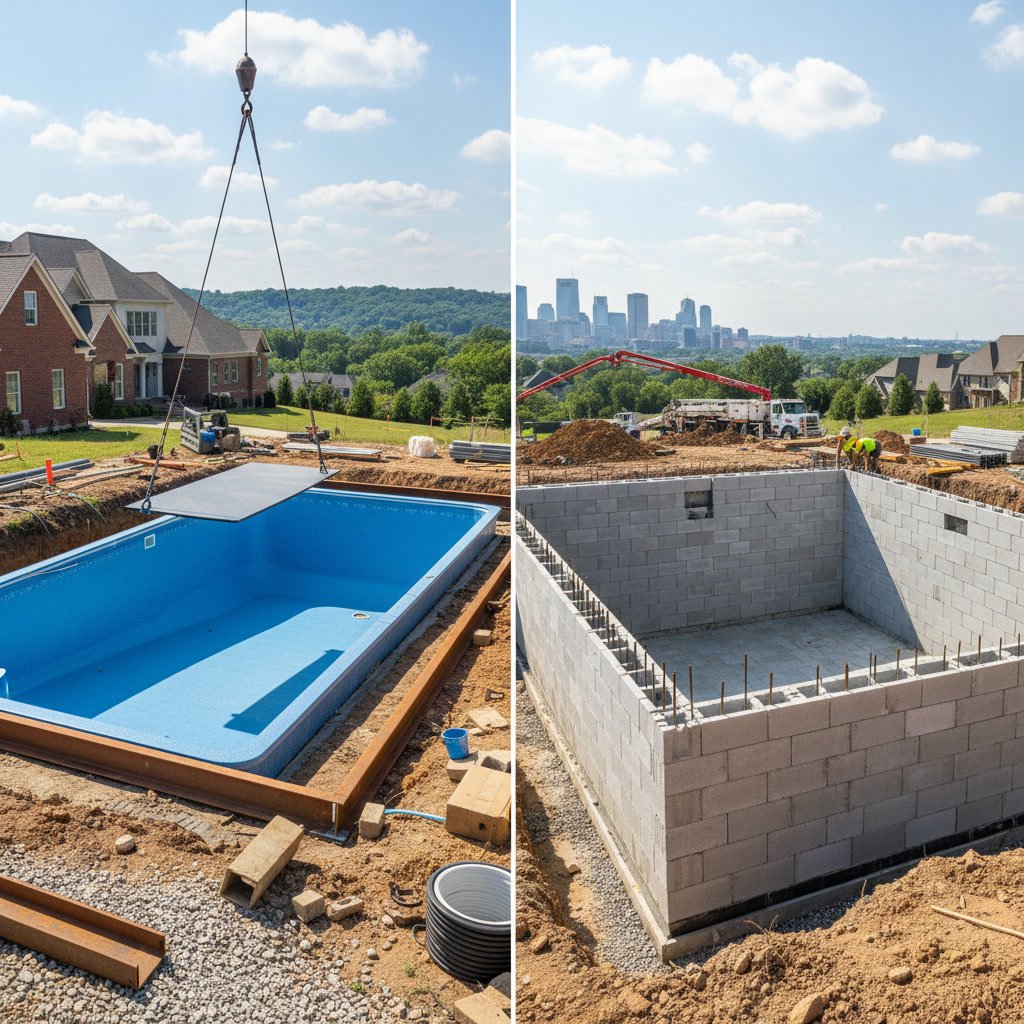
Fiberglass shells arrive at your property as a single pre-manufactured unit, dropped into an excavated hole. Installation typically takes one to two weeks from excavation to swim-ready.
For sloped yards, fiberglass offers significant benefits. The rigid shell provides its own structural integrity, which means it needs less surrounding support than other pool types. This can reduce the extent of grading and retaining wall work required, especially on moderate slopes.
The tradeoff is size and shape limitation. Fiberglass pools come in pre-designed shapes and sizes, typically maxing out around 16 feet wide and 40 feet long due to transportation constraints. If your sloped yard requires a specific shape to fit the terrain or your vision includes unique curves and features, fiberglass might feel restrictive.
Weight matters on slopes. A fiberglass pool weighs substantially less than concrete when empty, which reduces lateral pressure on surrounding soil. This can be a meaningful advantage on steep properties where soil stability is a concern.
Concrete Pools
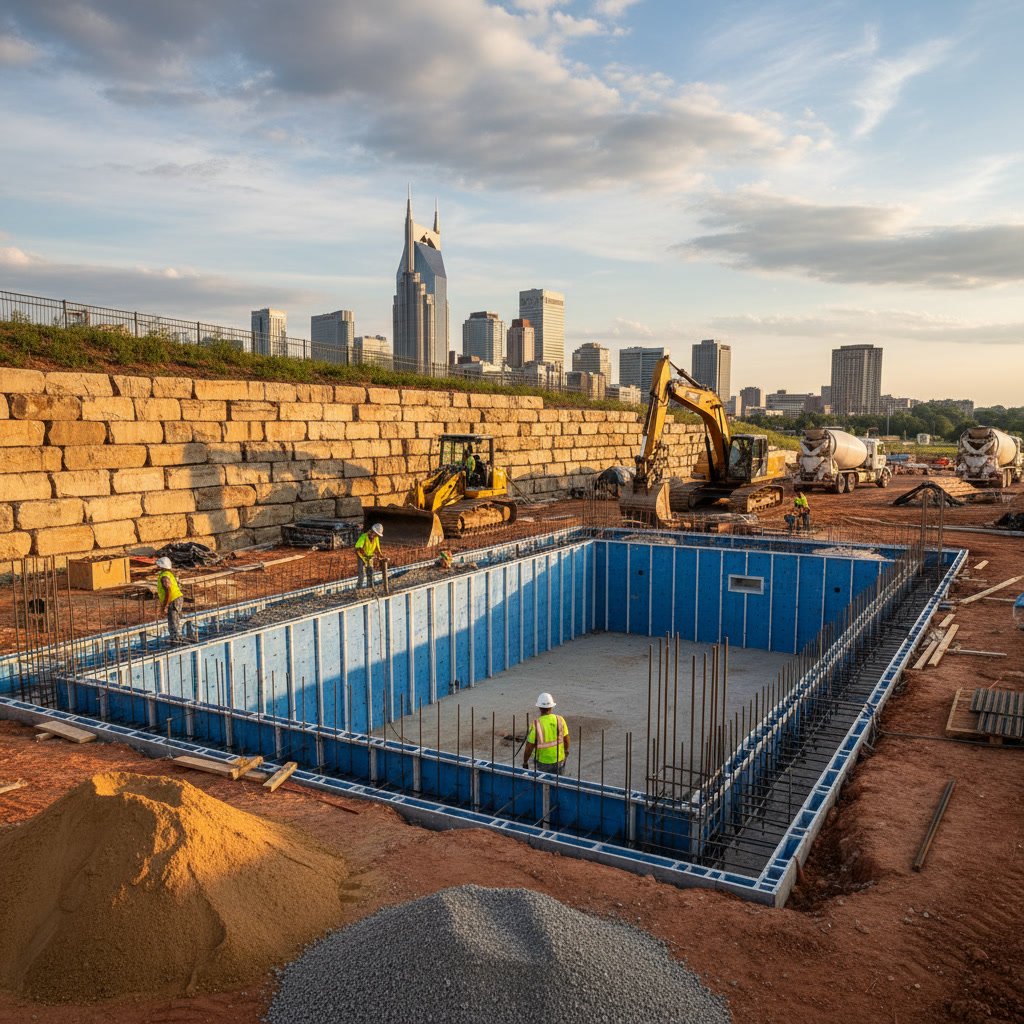
Concrete pools are built entirely on-site using steel rebar framework and either sprayed or hand-applied concrete (shotcrete or gunite). Construction takes eight to twelve weeks under normal conditions.
For challenging terrain, concrete offers unmatched flexibility. Builders can create any shape, depth, or size your property allows. This makes concrete pools ideal for Spring Hill yards where the natural slope dictates an irregular footprint or where you want to integrate the pool organically into the hillside.
Concrete also handles structural demands well. The thickness and reinforcement can be adjusted based on soil conditions and slope requirements. If your property needs a pool that doubles as part of a larger retaining structure, concrete provides that capability.
The downsides are time and cost. Concrete pools take longer to install, and on sloped properties, the additional engineering, formwork, and materials often push costs 20 to 40 percent higher than comparable flat-lot installations. Concrete also requires more ongoing maintenance than fiberglass, including acid washing and replastering every 10 to 15 years.
Custom Vinyl Pools
Vinyl pools use a flexible liner installed inside a structural frame, typically made from polymer panels, steel, or aluminum. The frame is built on-site, then the vinyl liner is fitted and anchored.
Vinyl offers a middle path between fiberglass and concrete. Custom vinyl pools can be built in a wide range of shapes and sizes, though not with the total freedom of concrete. Installation takes four to six weeks, faster than concrete but longer than fiberglass.
For sloped yards, vinyl’s main advantage is cost efficiency. The structural panels adapt reasonably well to moderate slopes, and total project costs typically run 15 to 25 percent less than comparable concrete installations. This cost savings can free up budget for necessary site work like retaining walls, drainage systems, and expanded patio areas.
The vinyl liner itself needs replacement every seven to ten years, which represents an ongoing maintenance cost. Sharp rocks or roots can puncture the liner if site preparation isn’t thorough. On sloped properties where erosion or shifting soil might expose sharp objects, this vulnerability requires careful attention during excavation.
Pro Tip: Don’t choose your pool type based solely on upfront cost. Factor in the expense of site preparation, retaining walls, drainage, and future maintenance. A slightly more expensive pool type that requires less extensive site work can actually cost less overall.
The Critical Role of Retaining Walls
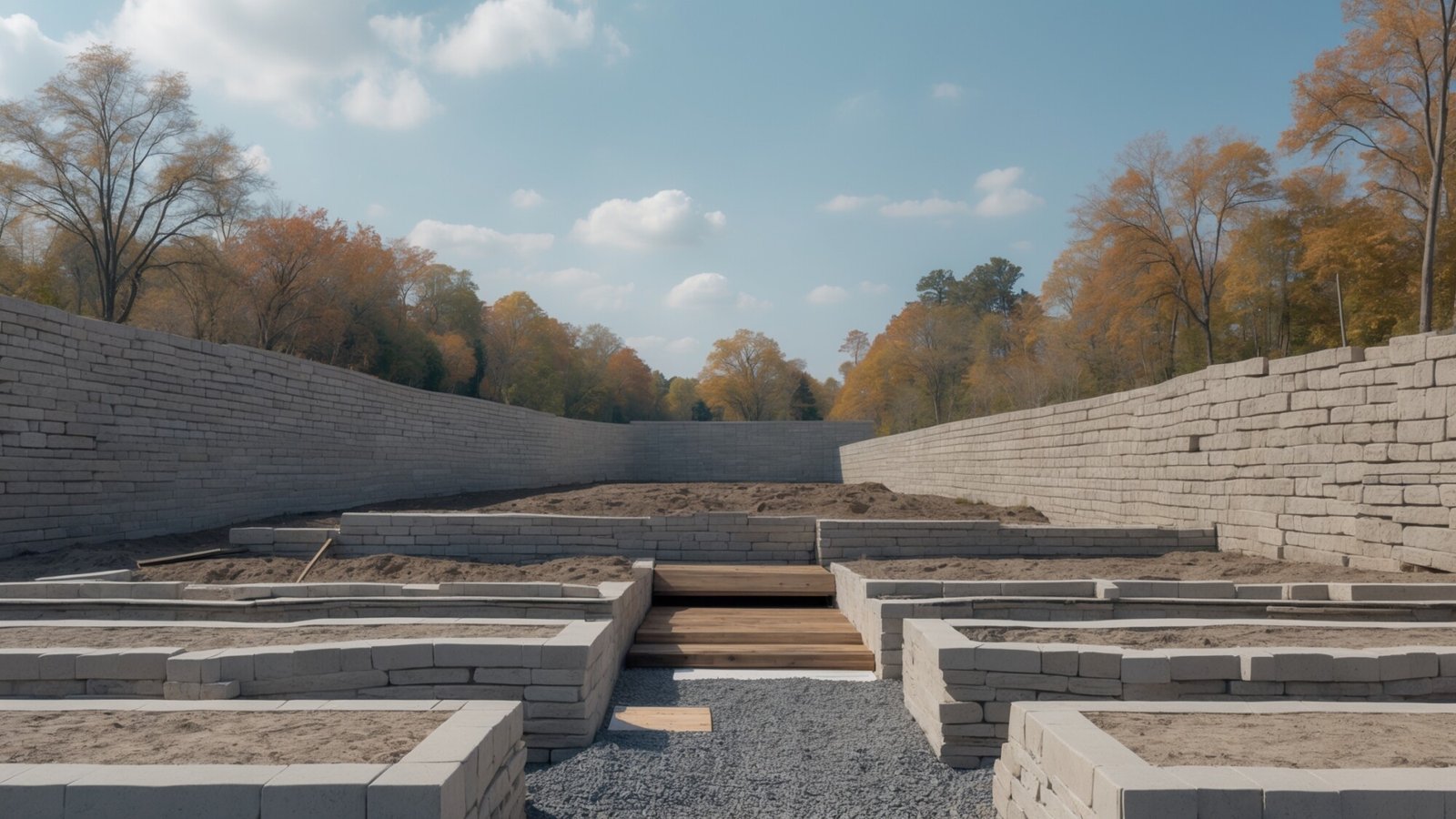
On almost any pool sloped yard Spring Hill project, retaining walls become essential infrastructure, not optional landscaping. They serve three vital functions: preventing soil erosion, creating level spaces for the pool and patio, and managing water drainage.
The steeper your slope, the more extensive your retaining wall system needs to be. A property with a ten-foot elevation change across the pool area might need tiered walls, with each tier stepping down the hillside to manage soil pressure safely.
Material selection affects both performance and appearance. Stacked stone, poured concrete, timber, and modular block systems each offer different load capacities, lifespans, and aesthetic qualities. For pool projects, engineered concrete or reinforced block systems typically provide the structural capacity needed, while natural stone veneers can deliver the appearance you want.
Retaining walls must be designed by someone who understands soil mechanics and lateral earth pressure. Amateur installations fail regularly, sometimes catastrophically. When thousands of pounds of water sit in a pool surrounded by retained earth, engineering matters.
If you’re researching materials and design approaches, our detailed guide on retaining wall materials for sloped Nashville yards covers the options available throughout Middle Tennessee, including Spring Hill.
Grading, Drainage, and Site Preparation
Before any pool goes into the ground, the site must be properly graded and drained. This phase often accounts for 20 to 30 percent of total project costs on sloped properties, but skipping or skimping on it creates expensive problems later.
Cut-and-fill grading involves removing soil from higher areas and using it to build up lower sections, creating level platforms for the pool, decking, and other features. The goal is to minimize the amount of soil that needs to be hauled away while creating stable, properly compacted areas that won’t settle or shift.
Drainage systems redirect water away from the pool area. French drains, swales, and catch basins intercept runoff before it reaches your pool zone. Proper drainage prevents erosion, protects your pool structure, and keeps your patio usable after storms.
Soil compaction might sound mundane, but it determines whether your patio cracks and your pool shell shifts over time. Loose fill settles unpredictably. Professionally compacted fill, installed in lifts and tested for density, provides a stable base that lasts decades.
Spring Hill’s soil conditions often include areas of limestone bedrock. Hitting rock during excavation requires hydraulic breakers or blasting, which adds time and cost. A pre-construction soil analysis and test borings can identify these issues before you commit to a specific pool location or type.
Integrating Hardscapes and Outdoor Living Features
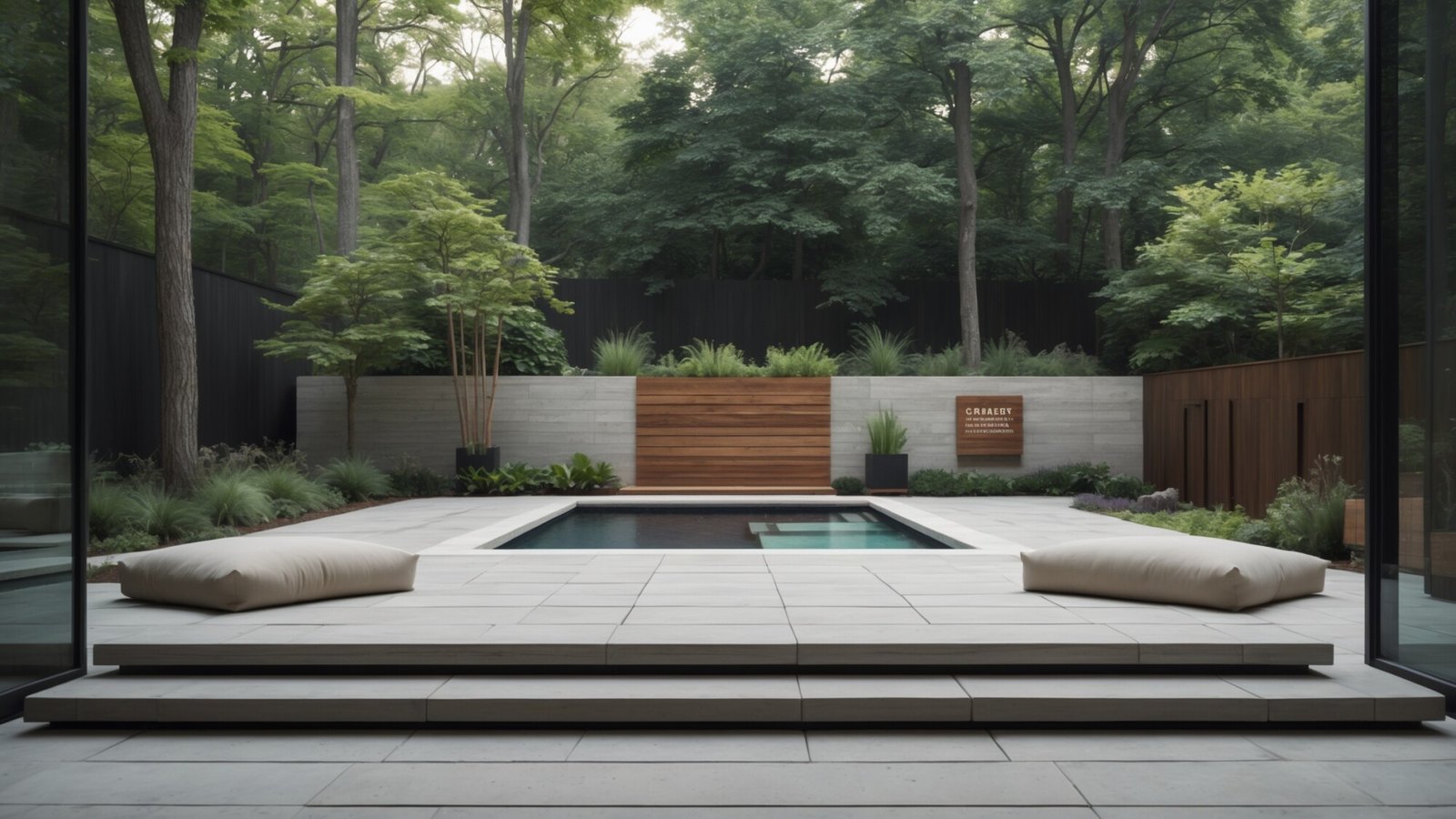
On sloped properties, the pool rarely stands alone. The most successful designs integrate the pool with surrounding features, creating a cohesive outdoor living space that works with the terrain instead of fighting it.
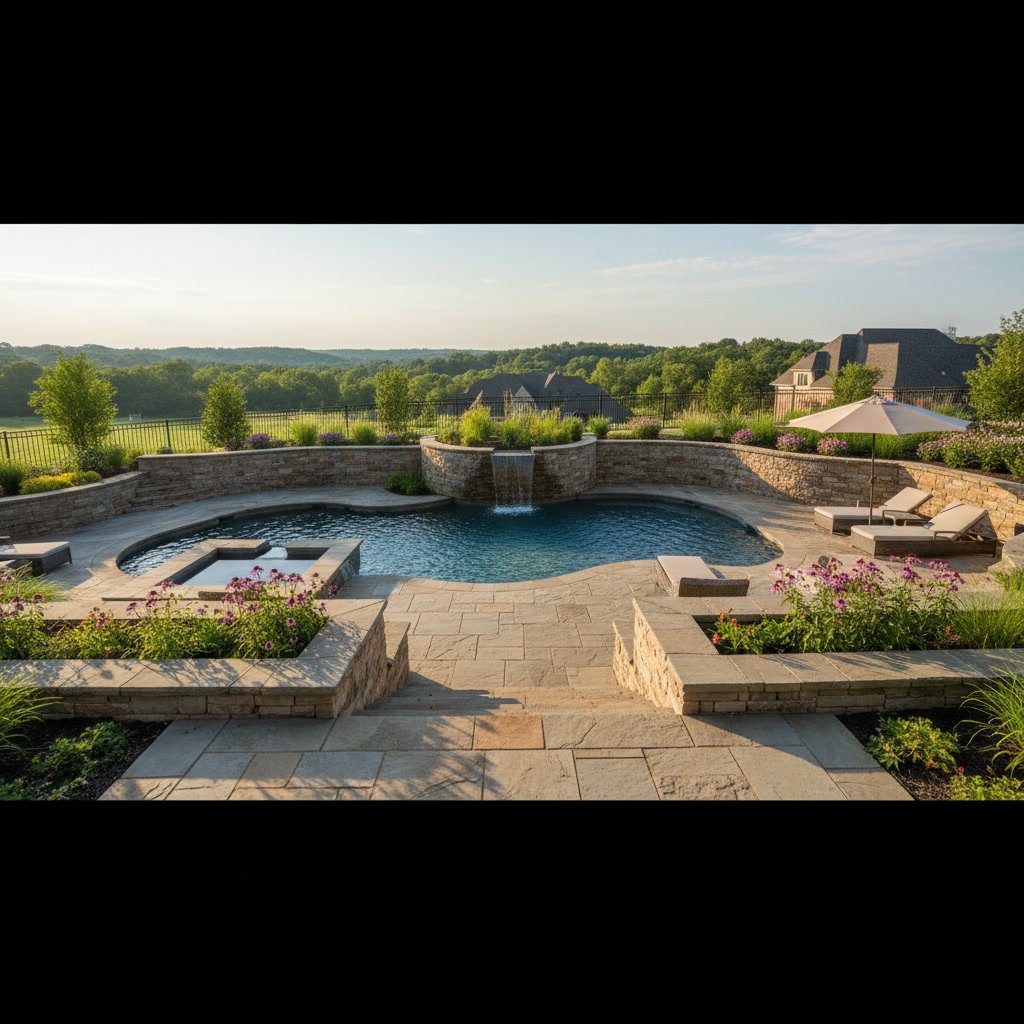
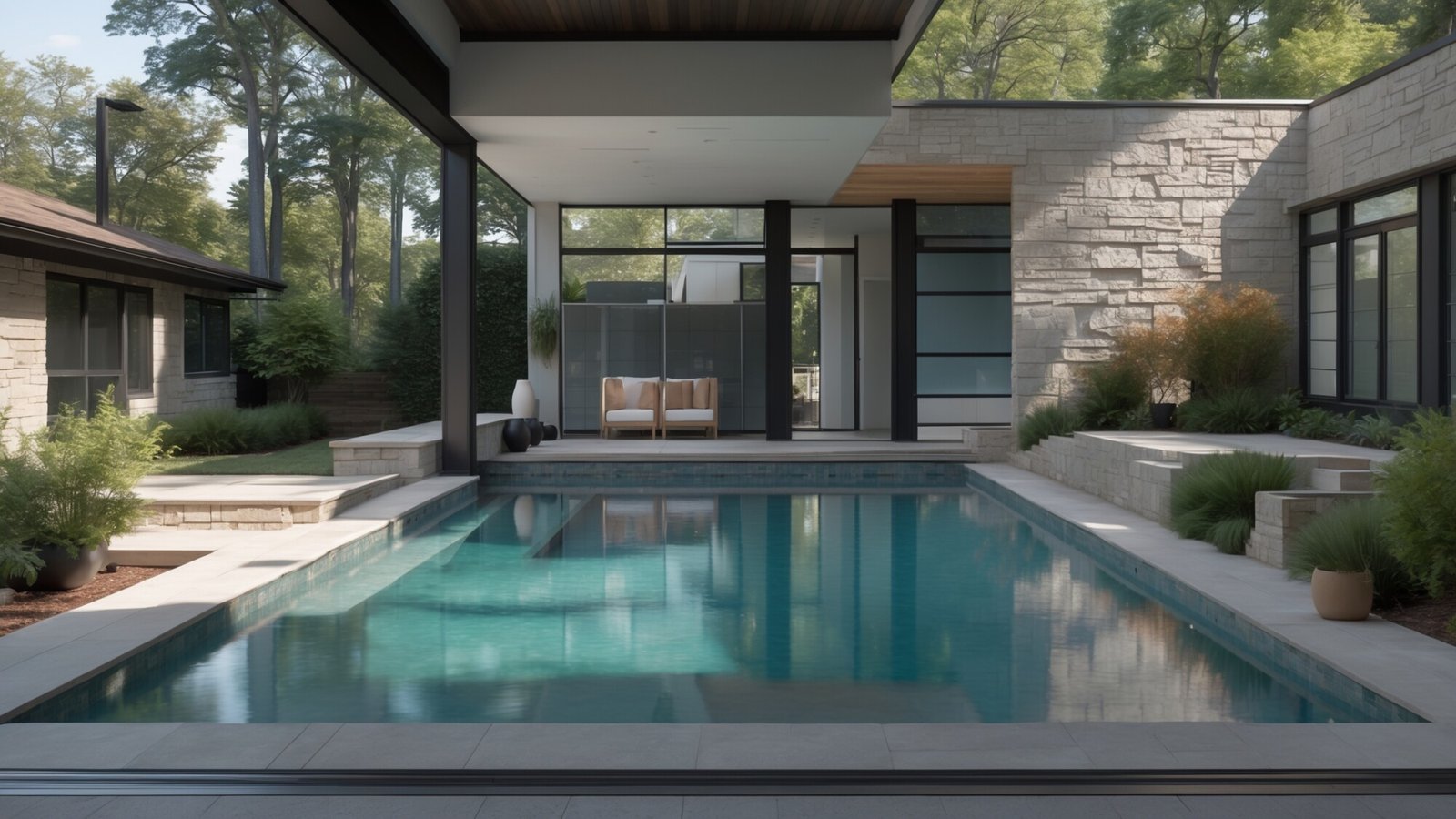
Patios and decking on slopes often use tiered designs, with multiple levels connected by steps or low walls. This approach reduces the amount of cut-and-fill required while creating distinct zones for lounging, dining, and poolside activities.
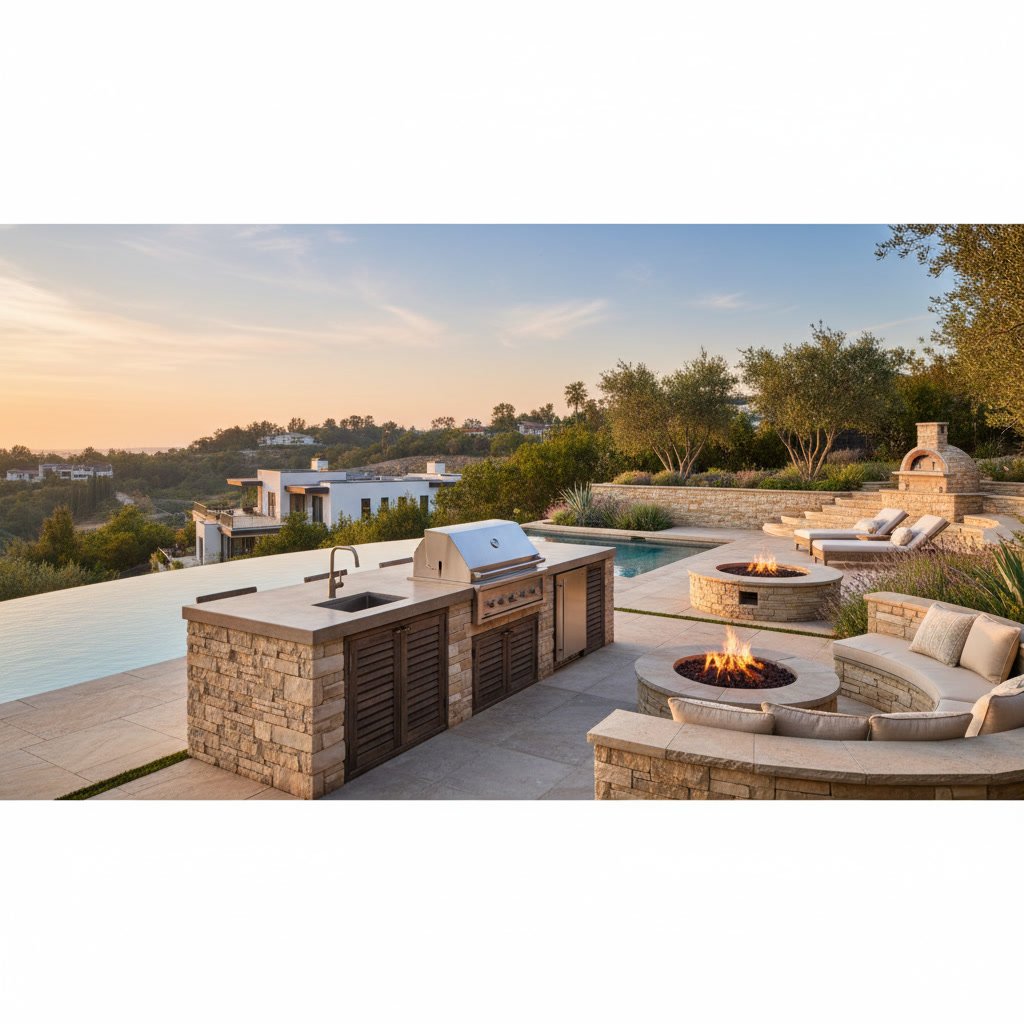
Hardscapes like walkways, seat walls, and fire pit areas anchor the design and make the entire space feel intentional. On a slope, hardscapes also serve practical functions, directing foot traffic and preventing erosion in high-use areas.
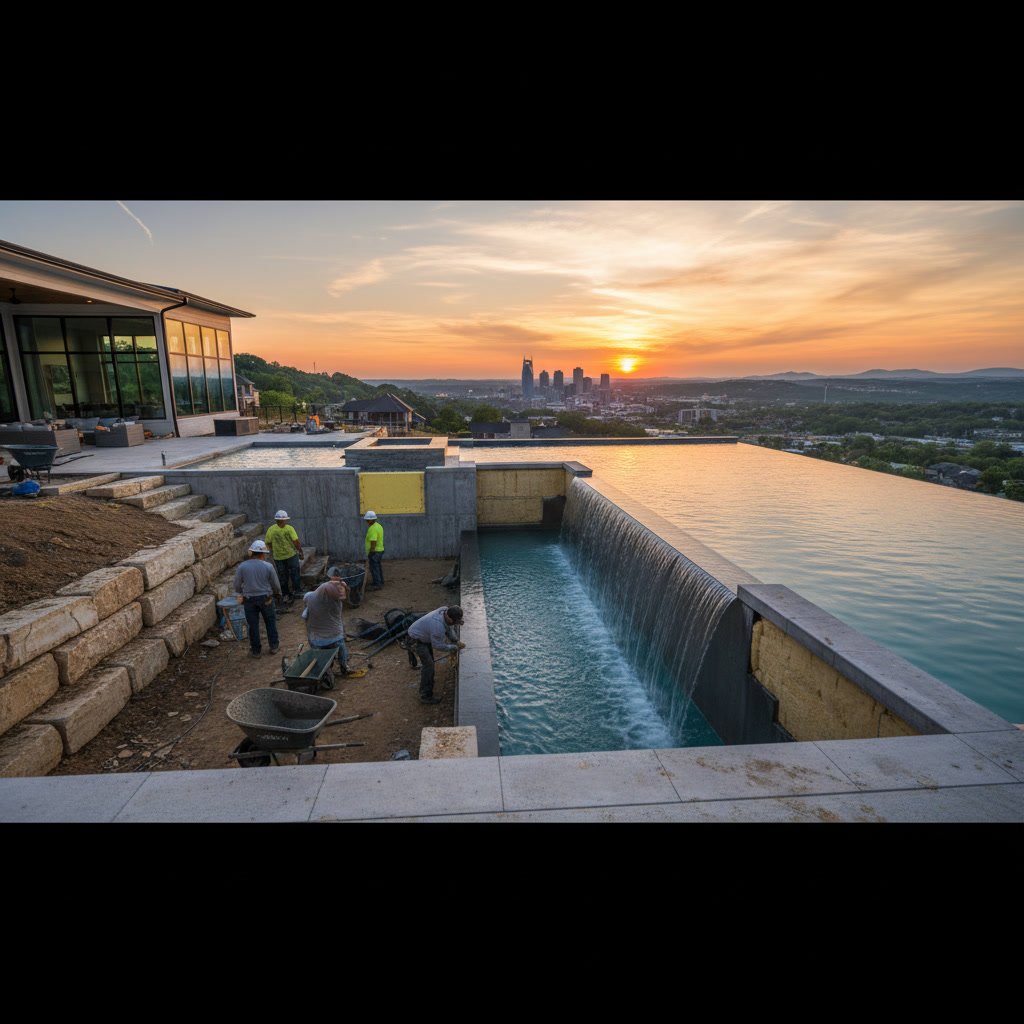
Water features work beautifully with sloped terrain. Elevated spas, infinity edges, and cascading waterfalls all take advantage of elevation changes. A pool built into a hillside can incorporate a raised spa that overflows into the main pool, or a vanishing edge that emphasizes the view beyond.
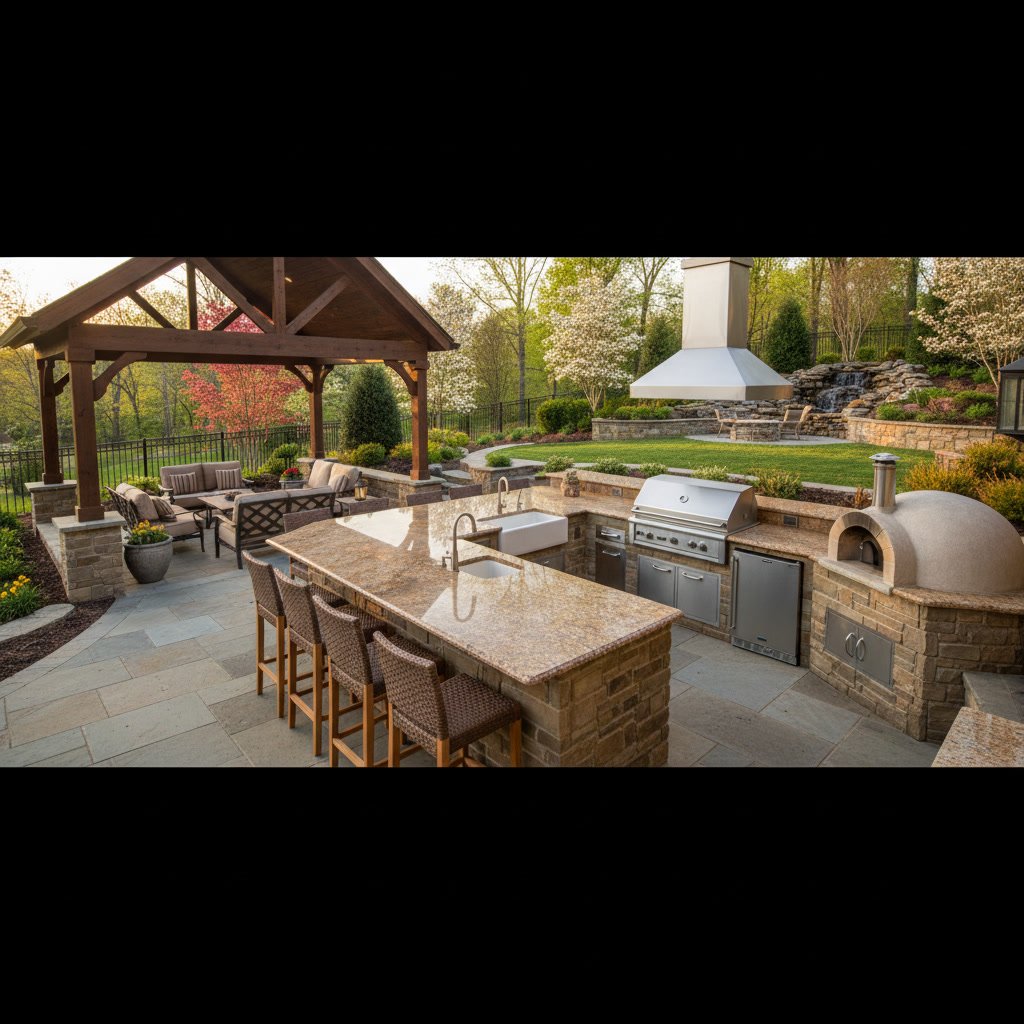
For homeowners who want the ultimate backyard retreat, outdoor kitchens and covered pavilions turn a pool into a true resort-style environment. These features require level pads and utilities, so they need to be planned into the initial grading and site work.
Why Professional Design and Installation Matter
Flat-lot pools are forgiving. Sloped properties are not. The difference between a successful project and an expensive disaster often comes down to experience and attention to detail.
Engineering calculations determine retaining wall dimensions, drainage capacity, and soil stabilization requirements. A qualified pool builder works with engineers or has that expertise in-house. Cutting corners on engineering to save money upfront almost always costs more when problems emerge later.
Permitting for pools on slopes involves additional scrutiny from local building departments. Spring Hill requires permits for pools, retaining walls over four feet, and significant grading. Inspections verify that drainage, structural support, and safety features meet code. Working with a licensed, experienced builder ensures your project passes inspections and protects your investment.
Backyard Resort Pools Inc. has built custom pools across Greater Nashville, including numerous projects in Spring Hill, Tennessee, where sloped yards are the rule rather than the exception. With over 50 years of hands-on experience, owner Ernie Nagy personally oversees every project, ensuring that site challenges are met with proven solutions, not guesswork.
Key Takeaway: The best pool type for your sloped yard depends less on the pool itself and more on how well your entire site is designed and prepared. The pool is one component of a larger system that includes grading, drainage, retaining walls, and hardscapes.
Cost Considerations for Sloped Pool Projects
Budget planning for a pool on a slope must account for site-specific variables that don’t apply to flat lots.
Excavation costs rise with slope severity and soil conditions. Rocky soil requires more equipment hours and specialized tools. Steep slopes mean hauling excavated material further or building temporary access roads for equipment.
Retaining wall expenses vary widely based on height, length, and materials. A simple four-foot block wall might add $8,000 to $15,000 to a project, while an extensive tiered system with natural stone veneer can exceed $40,000.
Drainage infrastructure typically runs $3,000 to $10,000, depending on how much water needs to be managed and where it can be safely directed. Properties with natural drainage paths cost less than those requiring pumps or extensive underground piping.
The pool itself represents roughly 50 to 65 percent of the total project cost on sloped properties, compared to 70 to 80 percent on flat lots. The remaining budget goes to site preparation and supporting infrastructure.
Transparent pricing matters. You should receive a detailed estimate that breaks out excavation, pool construction, retaining walls, drainage, and hardscapes as separate line items. This allows you to understand where your money goes and make informed decisions about trade-offs.
Choosing the Right Partner for Your Project
A pool sloped yard Spring Hill project requires a builder with specific expertise in site engineering, drainage design, and structural support systems. Not all pool contractors have this experience, and the difference shows in the results.
Look for a builder who starts with a thorough site evaluation, including soil testing and topographic analysis. Contractors who quote prices based on a quick walk-through often miss critical factors that drive costs once construction begins.
Ask to see examples of completed sloped-yard projects in your area. Photos show design capability, but visiting actual sites or speaking with past clients reveals how the pool and surrounding features have held up over time.
Licensing and insurance protect you if something goes wrong. Tennessee requires pool contractors to hold appropriate licenses, and reputable builders carry general liability and workers’ compensation coverage. Verify these before signing any contract.
Communication and on-site oversight separate excellent builders from mediocre ones. Projects change as construction progresses, especially on challenging sites. A builder who stays engaged, solves problems proactively, and keeps you informed delivers better outcomes than one who treats your pool as just another job.
For homeowners comparing pool types and construction approaches, our article on concrete versus vinyl pools offers additional perspective on how these options perform in various situations, including sloped properties.
Frequently Asked Questions
Can you build a pool on a steep slope?
Yes, pools can be built on steep slopes, but they require extensive site preparation including engineered retaining walls, proper drainage systems, and significant grading work. Concrete pools typically work best for very steep terrain because they can be custom-shaped to fit the available space and integrated into the hillside structure. Costs increase substantially compared to moderate slopes.
Which pool type costs less on a sloped yard?
Vinyl pools generally offer the lowest upfront cost, while fiberglass can reduce site work expenses on moderate slopes due to faster installation and less structural demand. Concrete pools cost the most initially but provide unlimited design flexibility. However, total project cost depends heavily on how much grading, retaining wall work, and drainage your specific property requires, which can shift the cost advantage significantly.
How long does it take to install a pool on sloped terrain?
Site preparation typically adds two to four weeks compared to flat-lot installations. Fiberglass pools can be swim-ready in three to five weeks total, vinyl pools in six to eight weeks, and concrete pools in ten to fourteen weeks. Timeline depends on slope severity, soil conditions, weather, and permit approval processes. Complex projects with extensive retaining walls or rock excavation can take longer.
Do sloped pools require more maintenance?
The pool itself requires standard maintenance regardless of terrain. However, sloped sites demand attention to erosion control, drainage system upkeep, and retaining wall inspection. Vegetation management around retaining walls and proper gutter and downspout routing prevent water from undermining your investment. Annual inspections of structural elements help catch small issues before they become expensive problems.
Will a pool on a slope affect resale value?
A well-designed pool that integrates thoughtfully with sloped terrain typically adds significant value and appeal. Buyers appreciate professionally executed outdoor living spaces that maximize challenging lots. Poorly designed or failing retaining walls, drainage problems, or pools that look awkwardly placed can hurt value. Quality of design and construction matters more than the simple presence of a slope.
Ready to Transform Your Sloped Spring Hill Property
Choosing the best pool type for a sloped yard in Spring Hill requires balancing your design vision, site conditions, budget, and long-term goals. Fiberglass pools offer speed and efficiency on moderate slopes. Vinyl pools provide cost-effective customization. Concrete pools deliver unlimited design freedom for complex terrain.
The unifying factor in successful projects is thoughtful planning, expert engineering, and quality execution. Your sloped yard isn’t an obstacle; it’s an opportunity to create something truly special that takes advantage of elevation, views, and the natural character of your property.
Backyard Resort Pools Inc. has spent five decades transforming challenging Greater Nashville properties into backyard resorts. Owner Ernie Nagy personally oversees each project, ensuring that your vision becomes reality with the craftsmanship and attention to detail that only comes from hands-on, dedicated involvement. If you’re ready to explore what’s possible on your sloped Spring Hill property, reach out to discuss your project at +16159441612 or visit our contact page to schedule a consultation.