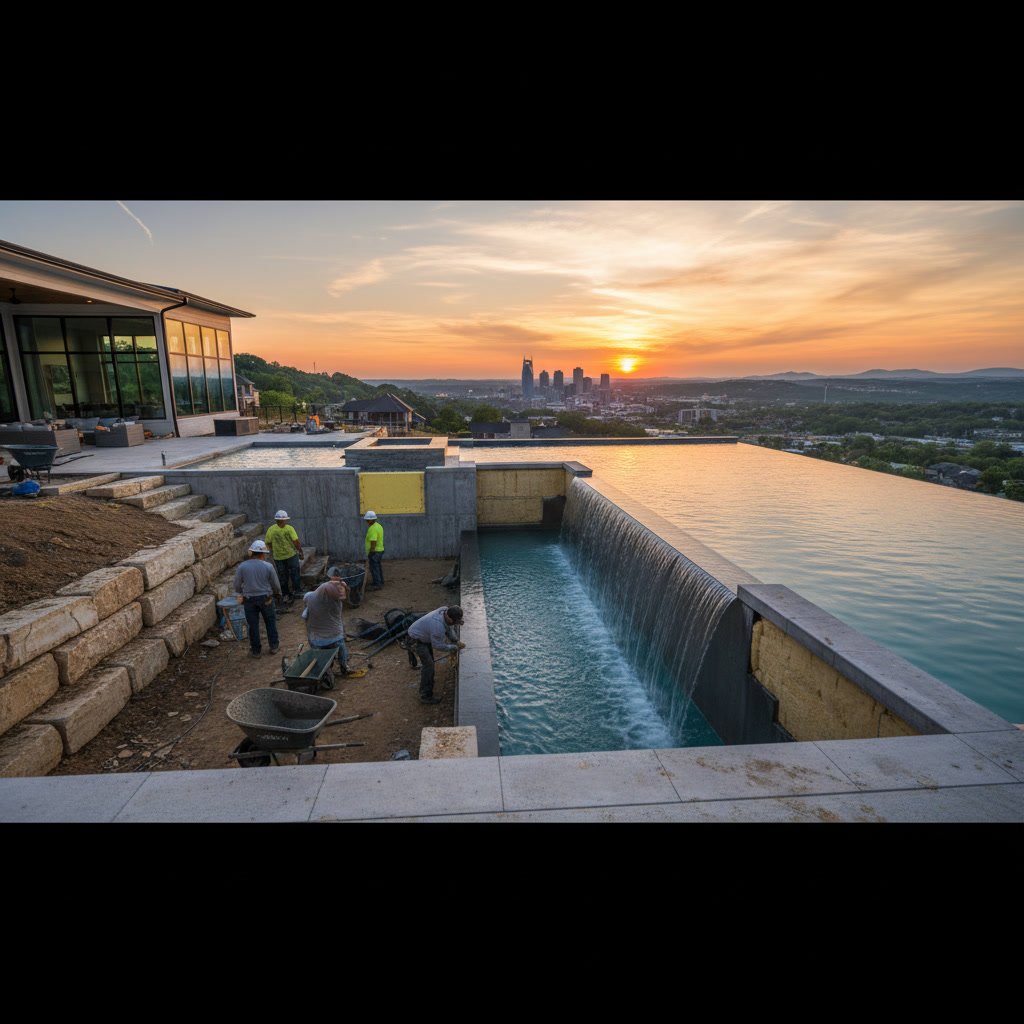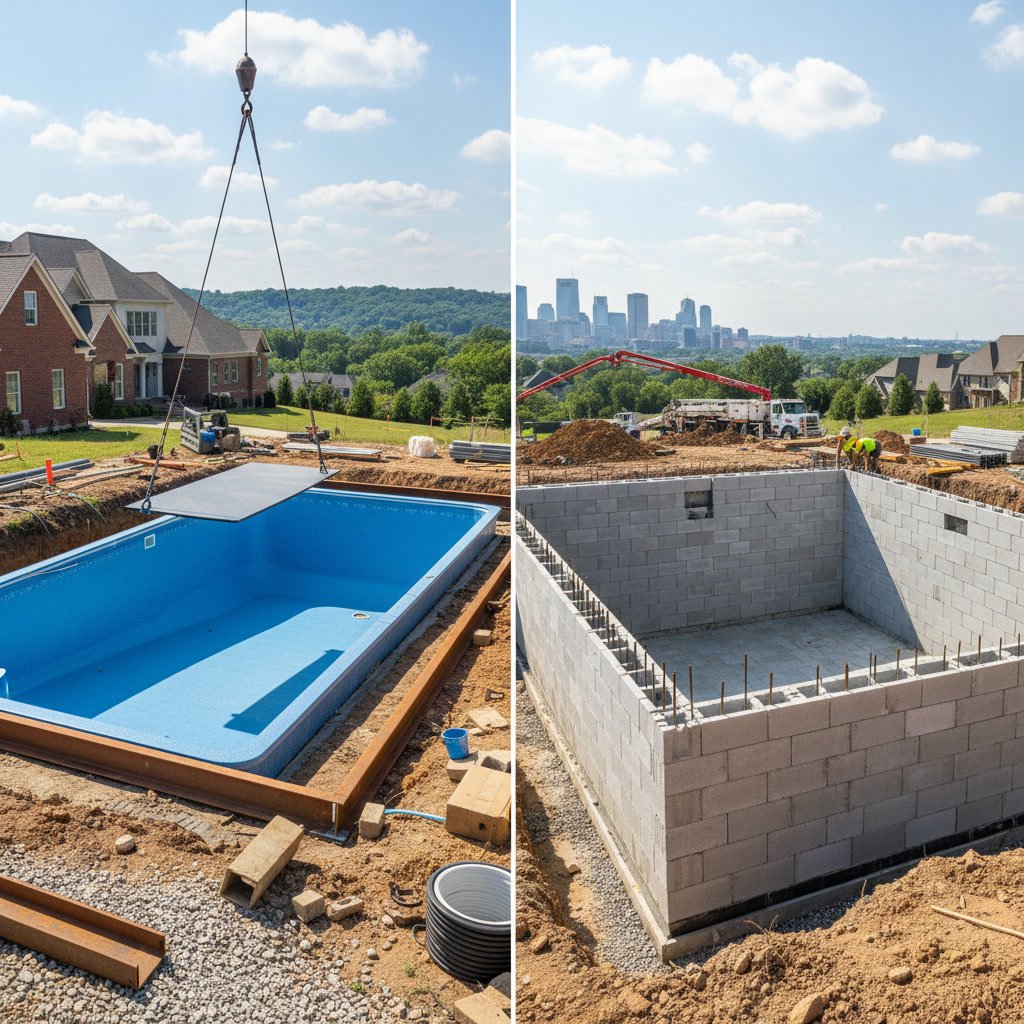
Nashville homeowners planning a pool installation face an important choice when comparing energy efficiency between two premium pool types. The debate of fiberglass vs ICF pools centers on which construction method delivers better insulation, lower heating costs, and superior heat retention during Tennessee’s variable climate. With energy prices rising and environmental concerns growing, understanding the thermal performance of each pool type can save thousands over the pool’s lifetime.
Both pool types offer distinct advantages over traditional gunite construction, but their energy profiles differ significantly. This guide examines insulation values, heat retention capabilities, operating costs, and real-world performance in Greater Nashville’s climate to help you choose the most energy-efficient option for your backyard.
Understanding ICF Pool Construction and Insulation
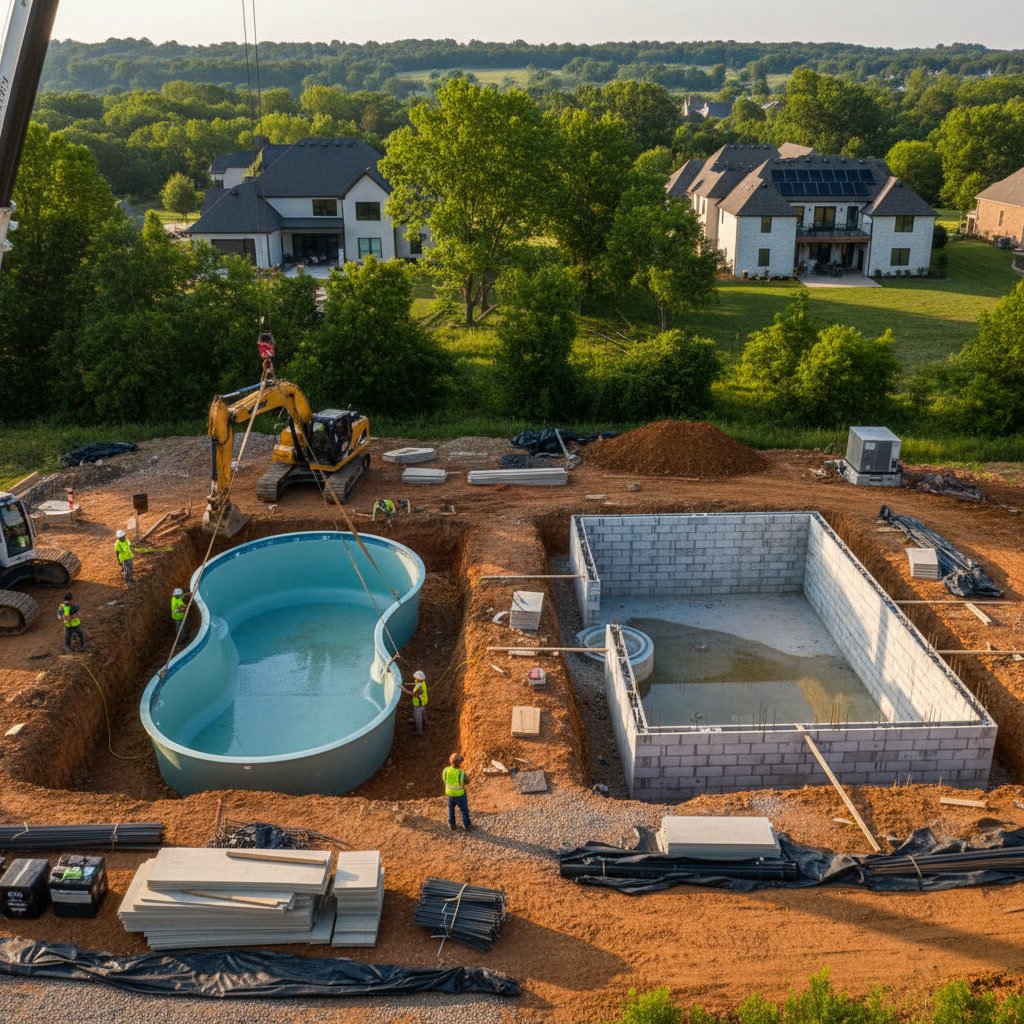
Insulated Concrete Form (ICF) pools represent the gold standard for thermal efficiency in pool construction. The technology borrows from energy-efficient home building, using foam blocks that create permanent insulation on both sides of a reinforced concrete core.
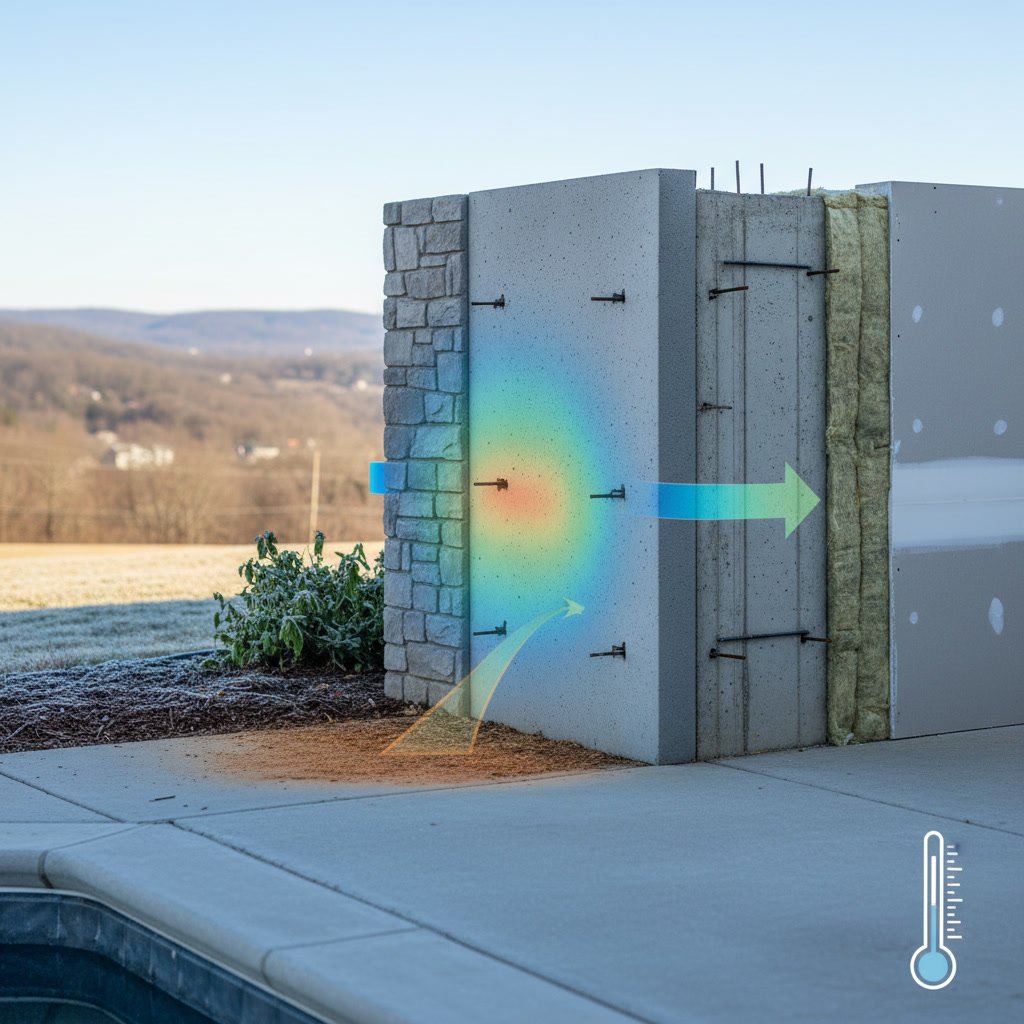
ICF blocks typically consist of expanded polystyrene (EPS) foam with R-values ranging from R-22 to R-50 depending on the specific product. For context, a standard concrete pool wall offers virtually no insulation, with an R-value near zero. The foam remains in place permanently, creating a thermal barrier that dramatically reduces heat transfer between the pool water and surrounding soil.
The construction process stacks interlocking foam blocks into the pool’s shape, reinforces them with steel rebar, then fills the cavity with concrete. The result is a concrete pool with built-in insulation that prevents heat loss through the walls and floor. ICF Pools have gained popularity among Nashville homeowners who plan to heat their pools or extend their swimming season beyond the typical May-through-September window.
How ICF Insulation Reduces Heat Loss
Ground temperature in Middle Tennessee averages 55-60 degrees year-round at depths of four to six feet. Without insulation, your heated pool constantly loses thermal energy to the cooler surrounding earth. An ICF pool’s foam barrier slows this heat transfer dramatically.
Independent testing shows ICF pools retain heat 3-5 times longer than uninsulated concrete pools. In practical terms, this means your heater runs fewer hours each day, your pool cools more slowly overnight, and you use significantly less energy to maintain your target temperature.
Fiberglass Pool Energy Efficiency Characteristics
Fiberglass pools offer energy advantages through a completely different mechanism. Rather than thick insulation, fiberglass relies on its non-porous gelcoat surface and relatively thin composite shell to influence thermal performance.
The fiberglass shell itself provides minimal insulation, typically with an R-value between R-4 and R-8 depending on thickness. This falls far short of ICF construction’s insulation capacity. However, Fiberglass Pools compensate through other energy-saving characteristics that affect your total operating costs.
The smooth, non-porous gelcoat surface requires fewer chemicals to maintain water balance. Chemical savings translate to energy savings because you’re running filtration pumps less aggressively. The shell’s flexibility also allows it to move slightly with ground shifts, maintaining structural integrity without the micro-cracks that can develop in concrete and create rough surfaces requiring additional filtration.
The Chemical Efficiency Connection
Energy efficiency extends beyond heating. Fiberglass pools typically require 50-75% fewer chemicals than concrete alternatives because the non-porous surface doesn’t harbor algae or absorb pool chemicals. Your circulation pump runs fewer hours per day, reducing electrical consumption throughout the swimming season.
This advantage matters especially in Nashville’s humid summers, when algae growth accelerates in concrete pools. The reduced chemical and filtration demands of fiberglass construction create measurable energy savings even if you never heat your pool.
Direct Energy Efficiency Comparison
When directly comparing fiberglass vs ICF pools for thermal performance, ICF construction provides superior insulation and heat retention. The numbers tell a clear story.
An ICF pool with R-25 insulation loses approximately 75% less heat through its walls and floor compared to an uninsulated pool. A fiberglass pool with R-6 insulation loses approximately 30-40% less heat than uninsulated concrete. If heating your pool is a priority, ICF delivers substantially better thermal performance.
For a typical 400-square-foot pool heated to 82 degrees in Nashville’s spring and fall months, an ICF pool might consume 40-60% less energy than a comparable fiberglass pool when accounting for heat loss through the shell. Over a six-month heated season, this difference can amount to $800-$1,500 in natural gas or propane costs.
Pro Tip: The energy advantage of ICF pools increases with colder ground temperatures. If you plan to swim year-round or heat your pool from March through October, ICF insulation delivers maximum return on investment.
Unheated Pool Considerations
The calculation shifts if you don’t plan to heat your pool. For unheated pools used only during Nashville’s natural swimming season, the thermal advantages of ICF construction matter less. Both pool types will reach similar temperatures through solar gain during summer months.
In this scenario, fiberglass pools may actually prove more energy-efficient overall due to their reduced filtration and chemical requirements. The pump energy you save throughout the season can exceed any modest thermal benefits ICF provides during the warmest months.
Operating Cost Analysis for Nashville Climate
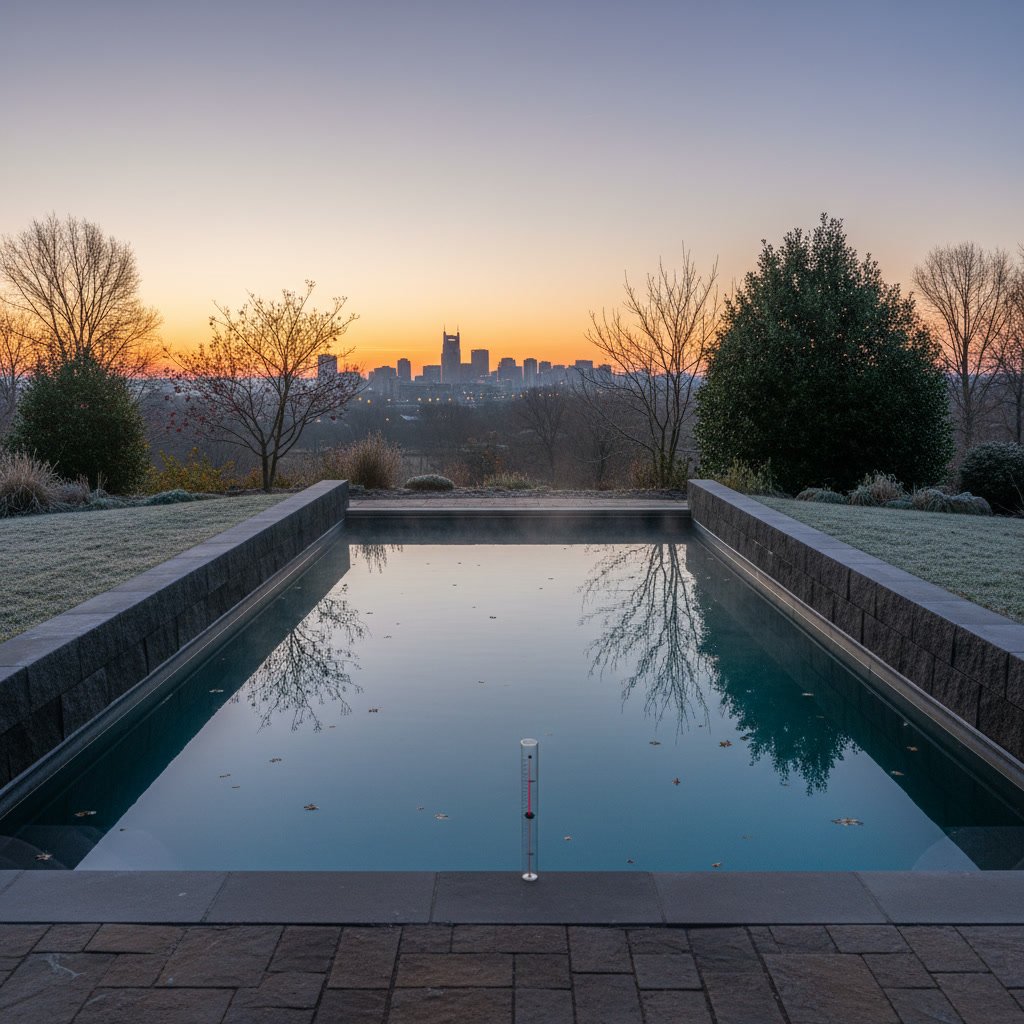
Nashville’s climate presents specific challenges that affect pool energy efficiency. The region experiences approximately 185-200 frost-free days annually, with pool season typically running May through September without heating.
Average summer air temperatures range from 70-90 degrees, allowing both fiberglass and ICF pools to maintain comfortable water temperatures through solar gain alone. The energy efficiency question becomes more relevant during shoulder seasons (April, early May, late September, and October) when many homeowners want to extend their swimming season.
A heated ICF pool in these months might cost $150-$250 monthly in energy, while a comparable heated fiberglass pool could run $250-$400 monthly depending on your target temperature and heat pump efficiency. Multiplying across four months of shoulder season heating shows potential annual savings of $400-$600 with ICF construction.
Long-Term Energy Cost Projections
Over a 20-year ownership period, the energy savings of ICF construction can total $8,000-$12,000 compared to heating a fiberglass pool. This assumes regular heating during shoulder seasons and occasional winter use.
However, ICF pools typically cost $15,000-$25,000 more upfront than comparable fiberglass installations. The energy savings alone may not fully offset the higher initial investment, making the decision dependent on your planned usage patterns and how much you value year-round swimming capability.
Installation Factors Affecting Efficiency
Proper installation significantly impacts the real-world energy efficiency of both pool types. Poor backfill practices, inadequate site preparation, or installation shortcuts can compromise the thermal performance of even the most efficient pool construction.
ICF pools require experienced builders familiar with concrete forming and foam insulation systems. The foam blocks must fit precisely, with joints sealed to prevent thermal bridging. Steel reinforcement must meet structural requirements while accommodating the insulation system. Working with a builder who has completed multiple ICF installations ensures you achieve the thermal performance the system promises.
Fiberglass pools demand equally careful installation, particularly regarding backfill material and compaction. Air pockets around the shell can compromise its modest insulating properties and create structural issues. The shell must be properly leveled and supported to prevent flexing that could develop stress cracks over time.
Backyard Resort Pools INC brings over five decades of custom pool experience to every installation across Greater Nashville. This depth of knowledge ensures proper installation practices that maximize the energy efficiency potential of whichever pool type you choose.
Site-Specific Considerations in Nashville Areas
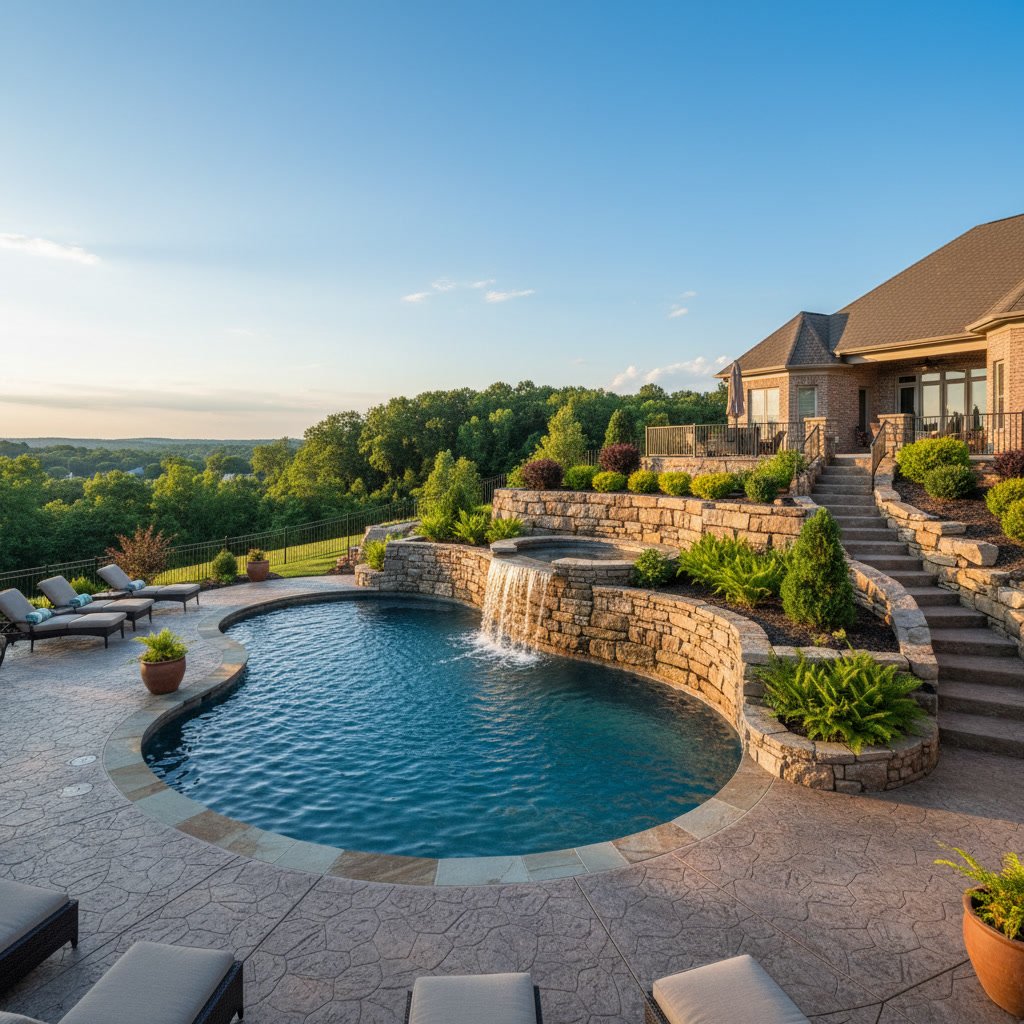
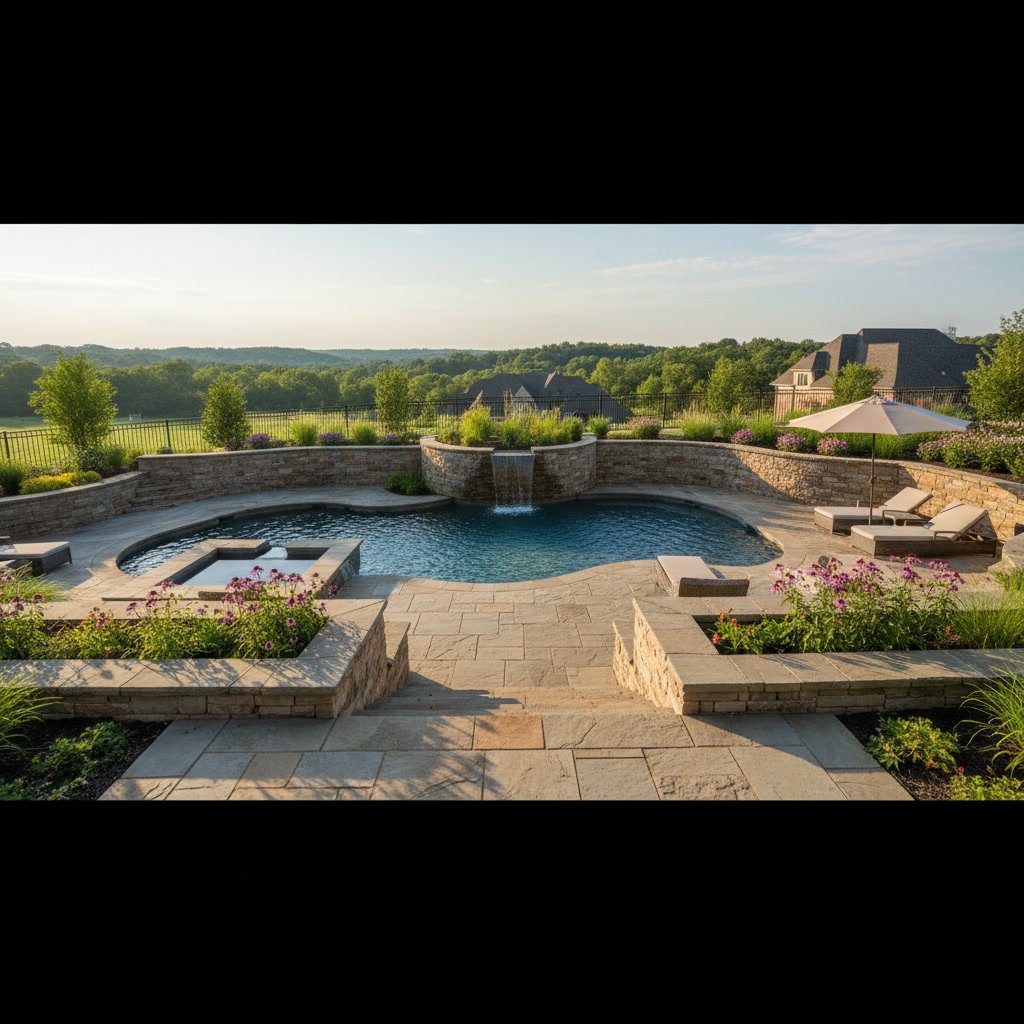
Local soil conditions, water tables, and terrain affect installation complexity and energy performance. Properties in Franklin, Tennessee and Brentwood, Tennessee often feature sloped lots requiring Retaining Walls and extensive site work that impacts heat retention characteristics.
Elevated pools or installations with significant exposure above grade lose more heat through exposed walls. ICF insulation becomes even more valuable in these scenarios, as the foam barrier protects against both ground temperature and air temperature effects.
Additional Energy-Saving Features and Upgrades
Regardless of whether you choose fiberglass vs ICF pools, several upgrades enhance energy efficiency for both construction types.
Pool covers represent the single most effective energy-saving accessory. A quality solar cover or automatic cover can reduce heat loss by 50-70% overnight, cutting heating costs dramatically. The cover benefit applies equally to fiberglass and ICF pools, though ICF’s superior insulation means you’re retaining more heat to begin with.
Variable-speed pumps reduce filtration energy consumption by 50-75% compared to single-speed models. These pumps run at lower speeds during routine circulation, ramping up only when needed for cleaning or water features. The Department of Energy estimates variable-speed pumps save pool owners $300-$700 annually.
Heating System Selection
Heat pump efficiency varies considerably based on technology and Nashville’s climate. Modern inverter-driven heat pumps maintain coefficient of performance (COP) ratings above 5.0 in moderate temperatures, meaning they produce five units of heat for every unit of electricity consumed.
Gas heaters work more efficiently for rapid heating or occasional use, while heat pumps excel at maintaining consistent temperatures over extended periods. Pairing a heat pump with an ICF pool’s superior insulation creates the most energy-efficient heated pool system available.
Solar heating systems offer zero operating costs but require significant roof or ground space and work best when paired with good insulation. An ICF pool retains solar-generated heat much longer than fiberglass, making the solar investment more effective.
Maintenance and Long-Term Performance
Energy efficiency changes over a pool’s lifetime based on how well it maintains its original properties. Surface deterioration, shell damage, or insulation degradation all increase energy consumption.
Fiberglass pools maintain their smooth gelcoat surface for 10-15 years before requiring refinishing. The non-porous surface doesn’t deteriorate in ways that affect energy efficiency, though the thin shell offers minimal insulation throughout its life. As mentioned in our detailed guide on fiberglass pool costs, the long-term maintenance requirements remain relatively predictable.
ICF pools maintain their insulation value indefinitely. The foam doesn’t degrade when protected by concrete and proper waterproofing. However, the concrete interior requires periodic resurfacing every 10-15 years. This maintenance doesn’t affect the insulation performance but does impact long-term ownership costs.
Chemical Balance and Energy Efficiency
Poor water chemistry gradually damages any pool surface, creating rough areas that require additional filtration and circulation. This increased pump runtime raises energy costs regardless of pool type.
Fiberglass pools tolerate chemical imbalances better than concrete surfaces, maintaining their low-friction surface longer. ICF pools with plaster finishes require more careful chemical management to protect the interior surface, though the insulation layer remains unaffected by water chemistry.
Making the Right Choice for Your Nashville Property
Choosing between fiberglass vs ICF pools for energy efficiency depends on how you plan to use your pool and your budget priorities.
Select ICF construction if you plan to heat your pool regularly, want to swim during shoulder seasons or winter months, or prioritize maximum energy efficiency above initial cost. The superior insulation delivers measurable savings for heated pools and creates a more comfortable swimming experience when outdoor temperatures drop.
Choose fiberglass if you plan minimal or no heating, prefer lower initial investment, value quick installation, or prioritize reduced chemical and filtration costs over thermal efficiency. The reduced maintenance demands and chemical requirements create modest energy savings even without ICF’s insulation advantages.
Many Nashville homeowners in areas like Murfreesboro, Tennessee and Mt. Juliet, Tennessee select ICF construction specifically for its energy performance, viewing the higher upfront cost as a long-term investment in lower operating expenses and extended swimming seasons.
Key Takeaway: ICF pools reduce heating costs by 40-60% compared to fiberglass through superior insulation. Fiberglass pools save energy through reduced filtration and chemical requirements. Your usage patterns determine which advantage matters more.
Frequently Asked Questions
How much more energy efficient is an ICF pool compared to fiberglass?
ICF pools with R-25 insulation retain heat approximately 60-75% better than fiberglass pools with R-6 insulation. For heated pools, this translates to 40-60% lower heating costs depending on your target temperature and local climate. The advantage matters most during cooler months when you’re actively heating your pool.
Do fiberglass pools stay warmer than concrete pools?
Fiberglass pools stay slightly warmer than standard uninsulated concrete pools due to their modest insulation value and smooth surface that absorbs solar energy efficiently. However, they don’t retain heat as effectively as ICF pools with dedicated foam insulation. The difference is noticeable primarily during evenings and cooler weather.
Is it worth heating a fiberglass pool in Nashville?
Heating a fiberglass pool in Nashville is worthwhile if you want to extend your season into April and October, but the operating costs will exceed those of an ICF pool. Budget approximately $250-$400 monthly for shoulder-season heating with a fiberglass pool, compared to $150-$250 for a comparable ICF installation. A quality pool cover significantly reduces these costs for either pool type.
How long does ICF pool insulation last?
ICF pool insulation lasts indefinitely when properly installed and protected. The foam remains encased in concrete and isn’t exposed to UV light, water, or other degrading factors. The insulation performance you achieve at installation will remain consistent throughout the pool’s lifetime, typically 50-plus years.
Can you add insulation to a fiberglass pool after installation?
Adding insulation to a fiberglass pool after installation is impractical because the shell is already in place and backfilled. Some homeowners insulate exposed above-grade portions of the pool or add insulated covers, but you cannot significantly improve the shell’s R-value after installation. This makes the initial pool type decision particularly important for energy-conscious buyers.
Working With Nashville’s Pool Building Experts
The choice between fiberglass and ICF pool construction affects your energy costs, swimming season length, and overall satisfaction for decades. Both technologies offer advantages over traditional concrete pools, but their energy profiles suit different usage patterns and priorities.
ICF pools deliver superior thermal efficiency through dedicated insulation that dramatically reduces heat loss and heating costs. Fiberglass pools provide energy savings through reduced filtration and chemical requirements, with modest insulation benefits. Understanding your planned usage helps identify which advantages matter most for your property.
Backyard Resort Pools INC has spent five decades designing and building custom pools across Greater Nashville, Tennessee. Owner Ernie Nagy personally oversees every project from Lebanon, Tennessee to Spring Hill, Tennessee, ensuring your pool delivers the energy efficiency and performance you expect. We build select projects that meet our exacting standards for quality and customer satisfaction, whether you choose fiberglass or ICF construction. Call +16159441612 to discuss which pool type best fits your energy efficiency goals and backyard vision.